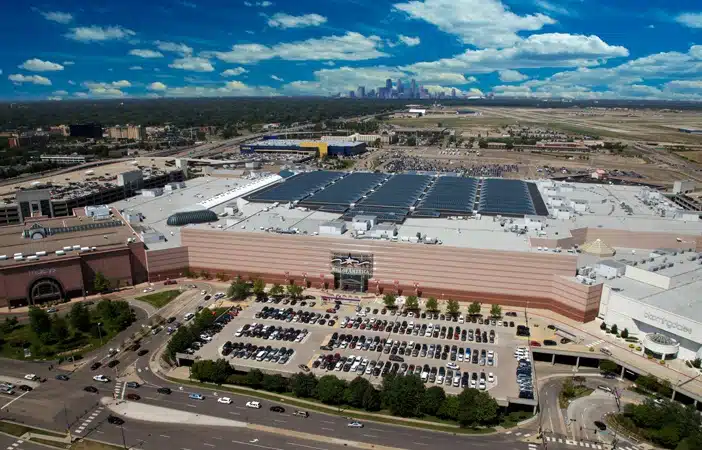


Adjacent to Minneapolis-Saint Paul International Airport at the intersection of I-494 and MN-77 in Bloomington, Mall of America is the largest shopping and entertainment complex in the United States, drawing more than 40 million visits annually from both the Twin Cities regional market and domestic and international tourists using the MSP airport corridor. The property encompasses approximately 2.87 million square feet of retail gross leasable area within a 5.6 million square foot overall complex including attractions and circulation space, opened in 1992 on the former site of Metropolitan Stadium, and is owned and operated by Triple Five Group. Nordstrom and Macy’s anchor the department store tier, with Nordstrom Rack among the major off-price tenants.
Nickelodeon Universe, the seven-acre indoor theme park occupying the atrium core, is a defining feature of the property. It operates year-round under a climate-controlled roof with more than 30 rides and attractions. SEA LIFE Minnesota Aquarium adds the dedicated attraction visit layer for families and school groups. FlyOver America provides the premium motion-simulation experience. Dave and Buster’s anchors the adult entertainment and group dining category. Rick Bronson’s House of Comedy and The Escape Game serve the adult entertainment occasions that complement the family programming.
The fashion and accessible-luxury register spans more than 500 retail tenants. Zara, H&M, Urban Outfitters, Anthropologie, Aritzia, Free People, lululemon, Arc’teryx, and Nike anchor the contemporary and performance categories. Coach, Kate Spade, and Michael Kors serve the accessible luxury tier, while CHANEL Fragrance and Beauty adds a prestige beauty signal. Minnesota does not charge state sales tax on clothing, which is often cited as a factor in cross-border retail visits from the surrounding upper Midwest.
The Radisson Blu on-site hotel generates a sustained overnight population that converts the property from a day-trip destination into a multi-day retail and entertainment occasion for out-of-state visitors. The MSP airport proximity means that a meaningful proportion of the visiting population arrives through the airport corridor rather than from the Twin Cities residential base, producing a tourist and leisure visitor layer that operates independently of the local market visit cycle. Apple serves the technology retail occasion; the LEGO retail presence is consistent with the family entertainment thesis that defines the property’s commercial logic.
Mall of America’s trade area is shaped as much by air access as by regional drive time, given its adjacency to MSP airport and the volume of national and international visitors it draws alongside the Twin Cities resident base.
Sit-down dining at the property includes Rainforest Cafe, Benihana, Bubba Gump Shrimp Co., Buffalo Wild Wings, Cadillac Ranch, Cantina Laredo, FireLake Grill House and Cocktail Bar and Hooters. Quick options include Burger King, Chick-fil-A, Chipotle, Johnny Rockets and Naf Naf Grill.
Yes. The mall has two food courts, Culinary on North and South Food Court.
Other attractions at the property include Nickelodeon Universe, The Escape Game, FlyOver America, Dave & Buster's, 5D Extreme Attraction, Amazing Mirror Maze, Moose Mountain Adventure Golf, Rock Of Ages Blacklight Minigolf, Ghost Blasters, Xscape Entertainment Center and Rick Bronson's - House of Comedy.
Records updated 21 July 2026.
Verified signals on brand expansion, store openings, and mall development. Free.
Free · No credit card · Unsubscribe any time