
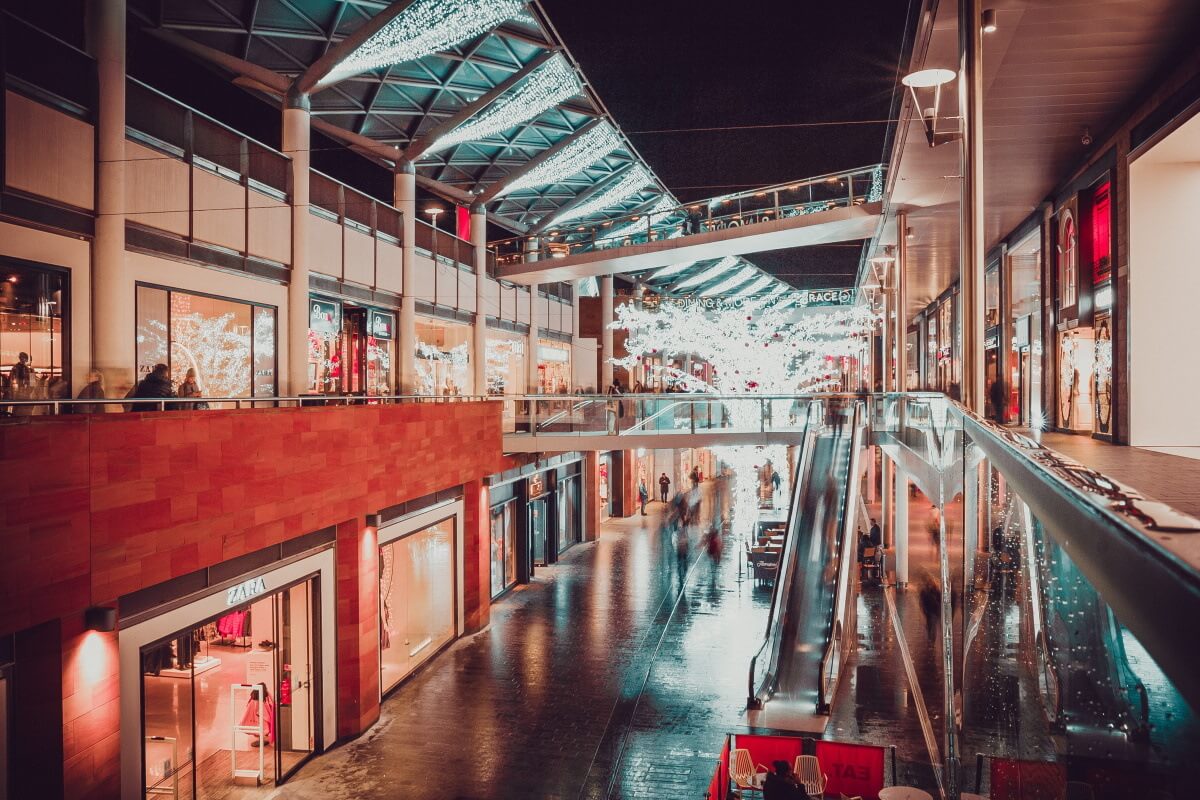
A structural overview of Israel’s flagship centers, with operator context, tenant tier, and market role.
A structural overview of Israel’s flagship centers, with operator context, tenant tier, and market role.
Israel operates roughly 50 enclosed and lifestyle centers above 20,000 sqm GLA, plus a denser layer of power and neighborhood formats. Three operators control the dominant share of the institutional stock: Azrieli Group, Melisron (Ofer Investments), and BIG Shopping Centers. Independent owners hold most of the upper-luxury layer, including Alrov Properties in Jerusalem.
The geography is consistent. Premium A+ and A++ centers cluster in central Tel Aviv, Ramat Gan, and Jerusalem. Super-regional anchors hold Haifa, Beer Sheva, and Petah Tikva. Lifestyle and open-air formats spread across coastal and peripheral cities. Eilat operates under a VAT-exempt regime, which shapes tenant economics in that submarket independently from the rest of the country.
The eight properties below anchor Israel’s commercial mall layer across class, geography, and format.
Malha is Jerusalem’s largest enclosed center, opened in 1993 and held within the Melisron (Ofer Investments) portfolio. About 40,000 sqm of GLA across three trading levels, anchored by international apparel and a dense mid to upper-mid tenant mix. Positioned next to Teddy Stadium and the Jerusalem Biblical Zoo, it captures both local and tourist traffic. Sabbath closure structurally shifts weekly footfall toward Sunday-to-Thursday peaks, with extended Friday morning hours functioning as the highest-density window. Operates as Jerusalem’s default A+ destination for the secular and traditional segments of the city.
Mamilla sits between Jaffa Gate and the New City, built as an open-air pedestrian avenue rather than an enclosed center. Operated by Alrov Properties, with about 140 storefronts at the upper-mid to upscale tier. Architecturally it follows the original line of Mamilla Road, with restored stone facades that integrate the property into the surrounding heritage streetscape. Tenant mix favors international fashion alongside Israeli design and Judaica. Commercial role differs from a typical mall: tourist conversion is a structural input given proximity to the Old City and the David Citadel district, not a marginal one.
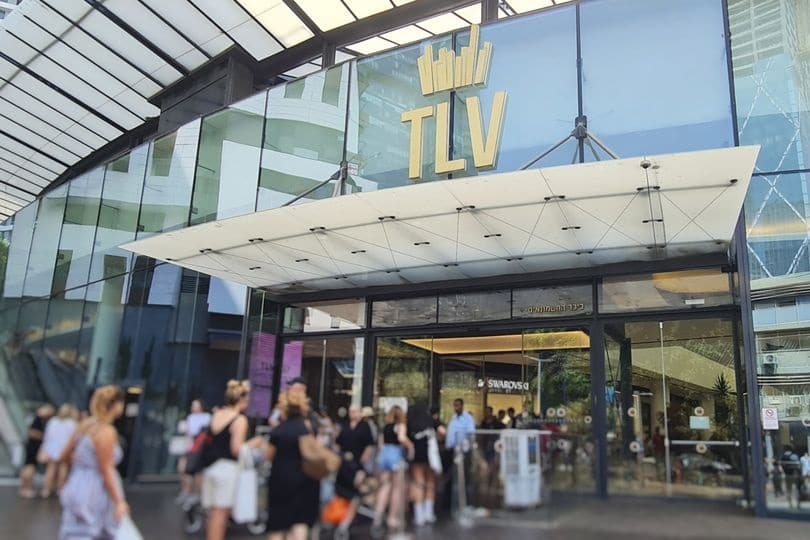
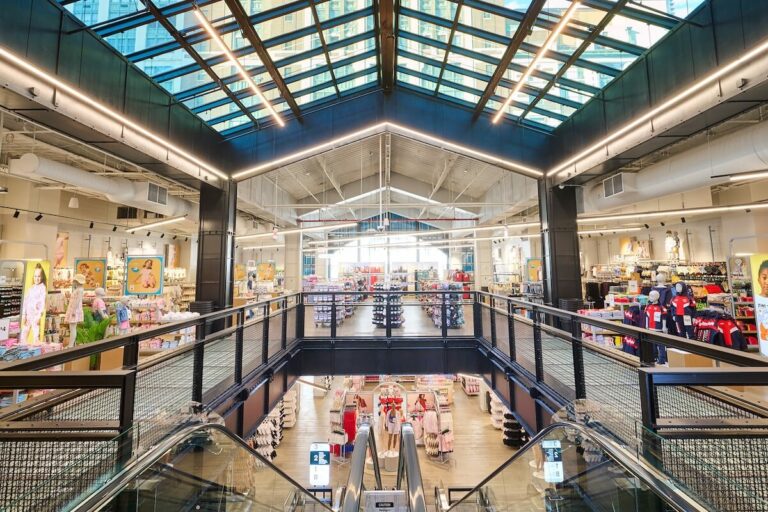
Located in the Sarona district at the Kaplan and Begin junction, TLV Fashion Mall is a fashion-led specialty center opened in 2013, with about 22,000 sqm of GLA. The format is vertical: four trading levels under a glass façade, with a tenant mix concentrated in apparel, footwear, accessories, and beauty rather than full-line department stores. International contemporary labels sit alongside Israeli designers. The property’s positioning addresses Tel Aviv’s professional and tourist segments through a denser luxury-adjacent mix than the surrounding street retail.
Ramat Aviv Mall is Israel’s most luxury-positioned shopping center, situated in the affluent Ramat Aviv Gimel neighborhood. Held by Melisron, with about 38,000 sqm of GLA across two floors and roughly 130 stores. The tenant base is anchored by international luxury houses, including Louis Vuitton, Dior, Saint Laurent, and Burberry, alongside premium Israeli labels and a dense beauty cluster. Per-square-meter productivity ranks among the highest in Israel and registers in global mall comparisons. Functions as a closed-circuit destination for the Tel Aviv affluent segment rather than a regional draw.
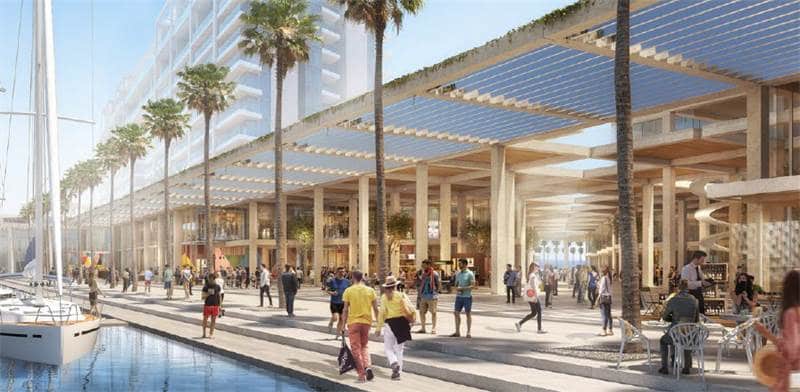
Photo from Arena Herzliya
Arena is a lifestyle center built on the Herzliya Marina, opened in 2004 with about 23,000 sqm of GLA across two open-air levels and roughly 115 stores. The mix is tilted toward apparel, café and restaurant operators, and beauty, with a notable concentration of waterfront dining. Tenant tier sits at upper-mid with selective luxury and contemporary international labels. The open-format design and marina positioning give it a sharper hospitality bias than the enclosed Tel Aviv centers, with the F&B layer functioning as a primary traffic driver rather than support to retail.
Mall Hayam is one of Eilat’s main enclosed centers, located on the Red Sea promenade. About 20,000 sqm of GLA with roughly 90 stores spanning apparel, footwear, electronics, sporting goods, and duty-sensitive categories. Eilat’s status as a VAT-exempt zone gives the property a structural pricing advantage on consumer electronics and select imported goods, which feeds directly into tenant economics. The customer base skews tourist, with seasonal volatility between summer domestic and winter international flows. The submarket also includes Ice Mall Eilat on the waterfront and BIG Eilat in the power-center layer.
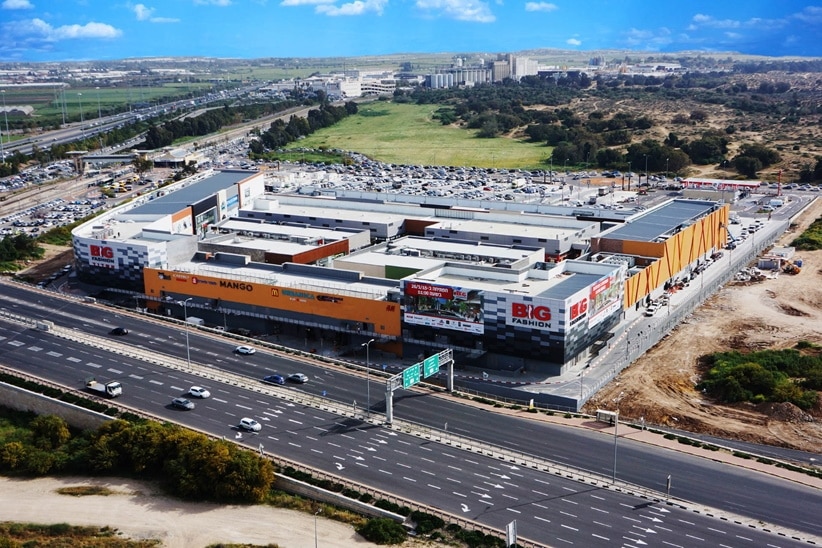
BIG Fashion Ashdod is the upmarket open-air format from BIG Shopping Centers, Israel’s dominant power-center developer. About 25,000 sqm of GLA, structured as a pedestrian high street rather than an enclosed mall. Tenant mix runs to mid-tier international apparel and Israeli chains, including H&M, Mango, MAC, and Swarovski, with a consistent F&B layer along the central spine. The format is BIG’s strategic response to the Azrieli and Melisron enclosed dominance in central Israel: deliver a fashion-grade tenant mix at lower occupancy cost in coastal and peripheral cities.
Grand Canyon is northern Israel’s primary super-regional center, opened in 1997. About 50,000 sqm of GLA across multiple trading levels, with around 200 stores when counting the adjacent power-center extensions. International tenant penetration runs high, with apparel anchored by full-line concepts and a 4,000 sqm fitness and spa facility integrated into the property. Like Malha in Jerusalem, the center observes Sabbath closure, though Haifa’s tradition of partial Saturday operation in surrounding districts gives the area weekend traffic that Jerusalem does not generate.
The eight properties above anchor Israel’s commercial mall layer. Below this tier sits a dense network of regional and lifestyle centers, including the Azrieli portfolio in Tel Aviv, Ramat Gan, Holon, Modi’in, and Beer Sheva, the Melisron Grand Mall format in Beer Sheva and Petah Tikva, and a separate outlet and power-center stratum operated almost exclusively by BIG. The full directory covering Israel and 50 other markets is on Malls.com.
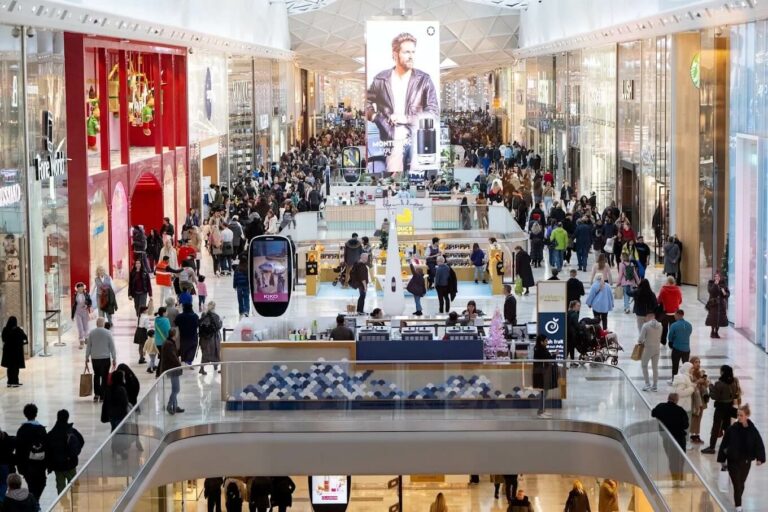
Bluewater opens its first new anchor since 1999. Next takes the former House of Fraser space with about 132,000 square…
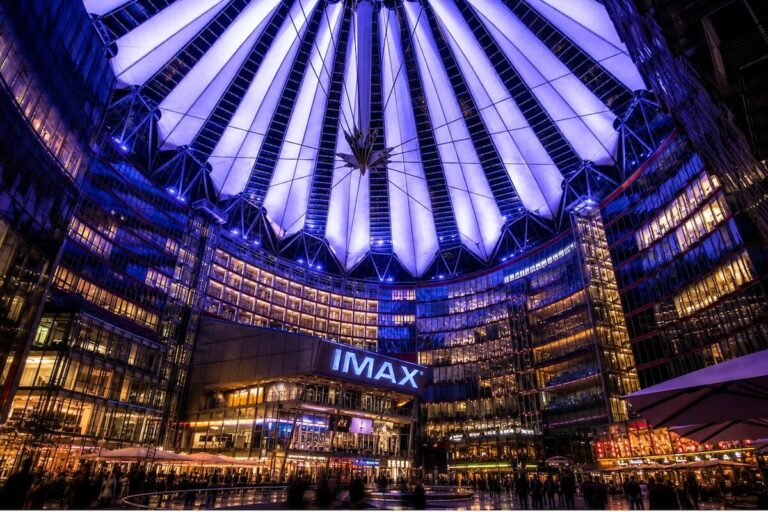
Opening in IMAX 70mm on July 17, 2026: Christopher Nolan's The Odyssey. Select shows went on sale one year in…

European retail is scaling AI, agentic commerce and retail media, but consumer trust is becoming the constraint. Four structural shifts…
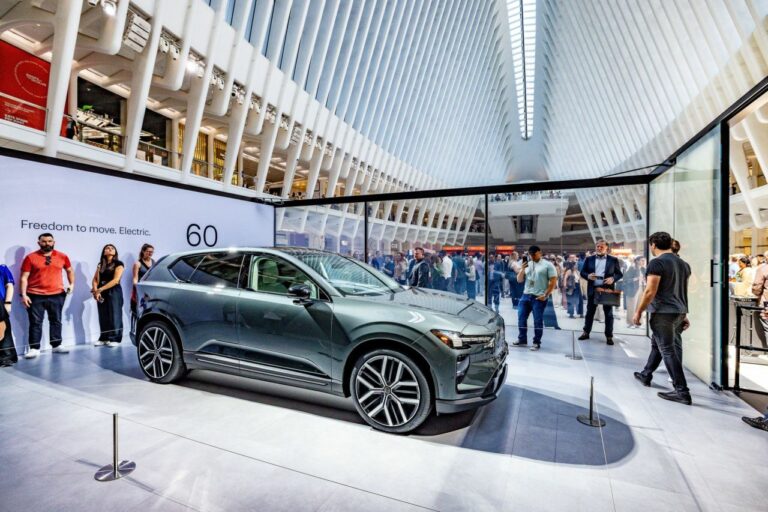
Mall operators are no longer leasing space for pop-ups. They are selling audience access.
Physical stores still drive most retail sales, fulfill online orders, support AI shopping, and help brands return to market.
A practical guide to nine mall tenant formats in 2026, from flagships and pop-ups to anchor redevelopment and mixed-use retail.
Verified signals on brand expansion, store openings, and mall development. Free.
Free · No credit card · Unsubscribe any time
