

A practical guide to nine mall tenant formats in 2026, from flagships and pop-ups to anchor redevelopment and mixed-use retail.
Five mall events happened in a seven-day window in May 2026. Primark opened a 54,000 square foot flagship at Herald Square. Lulus opened a limited-time pop-up at Mall of America. Battersea Power Station added more than ten new tenants. Primaris committed up to $225 million to redevelop eleven former Hudson’s Bay locations across Canada. Oakridge Park opens May 28 inside a 2.8 million square foot mixed-use envelope in Vancouver. The press called all of them openings.
They are not the same product. The lease structures are different. The capital requirements are different. The metric that decides whether each one worked is different. The customer who walks in is different.
What follows is a working classification of the nine retail tenant formats operating in mall properties in 2026, each anchored to a recent real-world example. The label “store opening” stretches across all of them. The economics do not.
This is the baseline. A five-to-ten year lease, base rent plus percentage rent above a sales breakpoint, co-tenancy provisions tied to anchor occupancy, kick-out clauses at year three or five if sales fall below threshold. Most retail GLA in a typical mall is permanent. When a mall operator reports 90 percent occupancy, this format is what most of the 90 percent means.
Aritzia at Toronto Eaton Centre is a permanent store. Coach at King of Prussia is a permanent store. The Sephora at Westfield Garden State Plaza that has been there since 2014 is a permanent store. The brand committed to the location for the long term. The property committed to the brand. The math is sales per square foot, occupancy cost ratio, and lease renewal rate.
The rest of the formats below are best understood as deviations from this baseline.
A flagship is not a bigger permanent store. It is a different product entirely.
Primark Herald Square opened May 8, 2026. Fifty-four thousand square feet across four floors, located across from Macy’s in the former Old Navy flagship building. This is Primark’s 40th US store and its largest. The lease term is longer than a permanent store. The base rent is higher. The tenant improvement allowance was sized to cover a buildout that runs into the low eight figures.
What changes in a flagship is not the size. It is the priority. A permanent store is priced on per-square-foot revenue. A flagship is priced on brand impressions, on halo for the rest of the chain, and on online sales lift in the surrounding trade area. The 54,000 square feet Primark has on Manhattan does not need to outperform a corresponding amount of permanent-store square footage elsewhere. It needs to make every other Primark in the country marketable.
Apple Fifth Avenue, Nike House of Innovation Paris, the Tiffany Landmark all run this math. They are not store-economics decisions. They are brand-economics decisions sitting inside a retail lease.
A pop-up is a test, a launch, or a seasonal stunt. It is never a permanent commitment.
Lulus opened a limited-time pop-up at Mall of America in May 2026. Thirty-to-180-day window. Occasionwear focused: cocktail dresses, formal wear, wedding guest, bridesmaid, summer dresses. Lulus has been a digitally native vertical brand for fifteen years. The pop-up is its first physical retail debut. What the team is buying with the lease is data — whether in-store conversion math supports a permanent store later.
The lease underneath this is short. Often percentage-rent only, sometimes a flat short-term fee. No co-tenancy provisions. No tenant improvement allowance worth tracking. The pop-up takes a white-box space the property already had vacant.
What a mall operator measures here is conversion: did the pop-up turn into a permanent lease or did the brand walk away. What the brand measures is whether the data justified the lease. Most pop-ups do not convert to permanent. The ones that do are not coincidence. The ones that do not are not failure. They are the test working.
A showroom looks like a store. It does not transact like one.
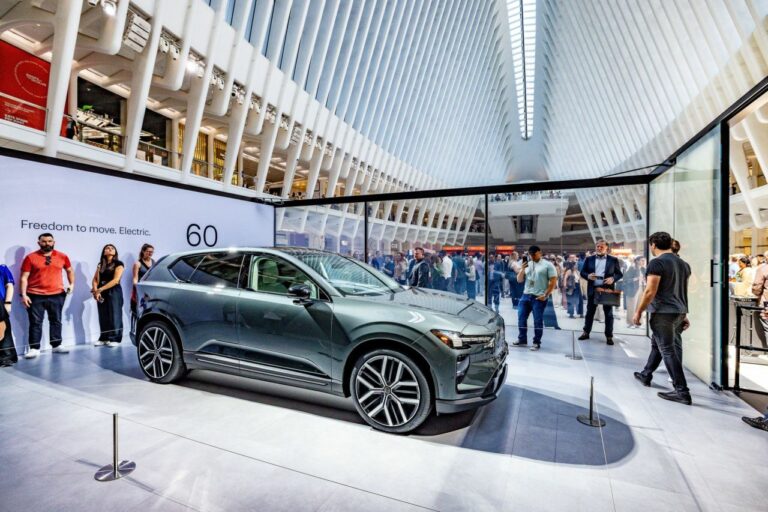
Tesla has been operating this format inside US malls for more than a decade and now sits inside Macerich’s Annapolis Mall as part of the 353,000 square foot signed-not-open pipeline. A visitor walks into the Tesla showroom, sits in a Model Y, configures one on a screen, talks to a specialist. The visitor cannot drive a car off the showroom floor. Fulfillment happens from a delivery center elsewhere.
Casper did this from 2018 to 2022. Warby Parker built its early retail this way. Bonobos ran Guideshops on the same principle. Tesla is the format’s longest-running scaled example in US mall properties.
The lease structure is standard retail GLA. The operator measures the wrong thing if it uses sales per square foot. The right measurement is foot traffic, dwell time, and the online conversion rate in the surrounding trade area. The brand opened the showroom to lower customer acquisition cost online. That is what the math has to show.
When a luxury auto brand signs into a mall property the way Tesla just did at Annapolis, the operator is selling something different from a Coach lease. The same square footage. A different product.
A shop-in-shop is a brand presence inside another brand’s footprint. Two retailers. One lease.
The Sephora locations inside Kohl’s are the largest active example in US retail. Apple has done this with Target. Ulta has done this with Target. In the 2010s and early 2020s, JCPenney hosted Sephora and Disney Store inside many of its mall locations under the same structure.
The mall operator signs one lease, with the host tenant. The shop-in-shop brand operates under a sublease, wholesale agreement, or revenue-share contract with the host. It has its own merchandising, sometimes its own staff, occasionally a separate point of sale. The host owns the master lease and the foot traffic.
This format adds category breadth to the host without using additional mall GLA. The brand adds distribution reach without signing into a property directly. Negotiating capital and exit terms is different from negotiating a permanent store lease, because the brand never holds the master agreement with the property.
A concession is shop-in-shop’s older European cousin.
Inside Harrods, Selfridges, La Rinascente, and most of the major European luxury department stores, individual brands operate concessions inside the host’s footprint. Branded merchandising, branded staff, host tenant’s point of sale. The brand pays the department store a revenue share rather than a fixed lease.
The format is rare in US mall retail. It exists in some US department stores — concession beauty counters at Bloomingdale’s, jewelry concessions at Saks Fifth Avenue — but the US has historically preferred shop-in-shop over concession because of how POS systems and inventory accounting work. In Europe the format is the default for many luxury brands inside the major department stores.
For a brand expansion team, the difference matters. A concession means the brand never holds the lease and the host owns the customer relationship. The brand owns the assortment. The exit terms are negotiated against the host, not against the property owner.
This is the format that gets called an opening, but is closer to a campaign.
The Devil Wears Prada 2 ran activations across six malls on three continents in April and May 2026. Hudson Yards. Westfield Century City. Pacific Place. La Rinascente Duomo. Trendpot in Seoul. AMC and Regal kiosks. Diet Coke wrapped the spiked red heel onto cans across the United States and Europe. None of those activations had a retail lease. They ran on marketing co-op agreements, day-to-week rentals, and common-area placements.
Disney Store Limited Time at Ross Park Mall, opening May 23, sits at the longer end of this format. Go! Retail Group operates the location. The lease runs through the holiday season. The product cycle is built around IP windows, not seasonal retail calendars.
The funding source is the difference. A pop-up runs from the brand’s retail operations budget. An event activation runs from the brand’s marketing budget. The mall operator has a different conversation at a different price point. The campaign budget for a film launch is not the campaign budget for a category-test pop-up.
When Hudson’s Bay closed eleven Canadian mall locations, the supply event was anticipated.
Primaris REIT announced in May 2026 that it will deploy $175 to $225 million to redevelop those eleven boxes into curated multi-tenant programs, targeting 8 to 10 percent returns. The closed anchor is no longer a vacancy problem. It is raw material.
The format is the operator-led subdivision of a closed department store footprint into experiential, off-price, or category-defining tenants. The leases inside it are individual five-to-ten-year terms, often with significant tenant improvement allowances and signed-not-open commitments because the redevelopment timeline runs months beyond the leasing window. Macerich’s $40 million leasing capital plan for Annapolis Mall, announced May 6, follows the same template at single-property scale, building on the 353,000 square feet of new tenants that Centennial and Atlas Hill RE signed during their 21-month hold of the property.
What changed between 2018 and 2026 is the framing. A closed Macy’s box used to be a workout problem. Now it is a capital allocation opportunity. The math is similar. The category of decision is different.
A mixed-use retail layer is retail signed inside a building that is not primarily a retail building.
Oakridge Park opens May 28, 2026 in Vancouver. The property has 1,400 apartments above its retail floor, 720,000 square feet of office around it, and a SkyTrain station connecting it. The retail program is 650,000 square feet. Louis Vuitton and Aritzia have signed. They look like luxury mall tenants. The mall is not the building.
Hudson Yards opened in this format in New York in 2019-2022. Battersea Power Station opened in this format in London in 2022 and has welcomed 40 million visitors since, now housing more than 170 tenants. The retail brands inside both signed standard retail leases. What is not standard is the foot traffic underwriting: the Louis Vuitton customer at Oakridge is part resident from the apartments above, part office worker from the buildings around, part transit rider arriving via SkyTrain, part destination visitor. The mix is not the mix at Bloor Street or Fifth Avenue.
For a brand expansion team, the mixed-use retail layer is the format that resembles a luxury mall on paper but underwrites like a mixed-use building in practice. The dwell time profile is different. The repeat-visit frequency is different. The basket size from each customer source is different. The Louis Vuitton leasing contract beneath an Oakridge flagship is not the same contract as the one beneath a 1990s regional mall.
The label “store opening” covers all nine of these formats. It does not distinguish between them. For most readers of business press, that is fine. For mall operators, brand expansion teams, and leasing brokers, the difference between formats is the difference between pricing a deal correctly and pricing it as if it were a different deal.
What changes across the nine is the lease structure, the capital required, the metric that decides whether the opening worked, and the customer who walks in. None of these are visible from the verb.
The teams that price by format outperform the teams that price by label.
That is the only thesis behind this page.
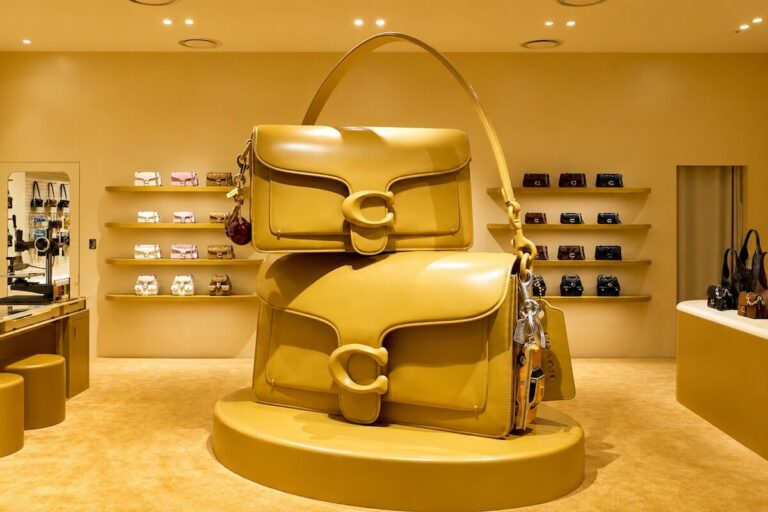
Gross margins and selected profit metrics for Coach, Pop Mart, lululemon, Miniso, Five Below, TJX and Costco, plus where each…
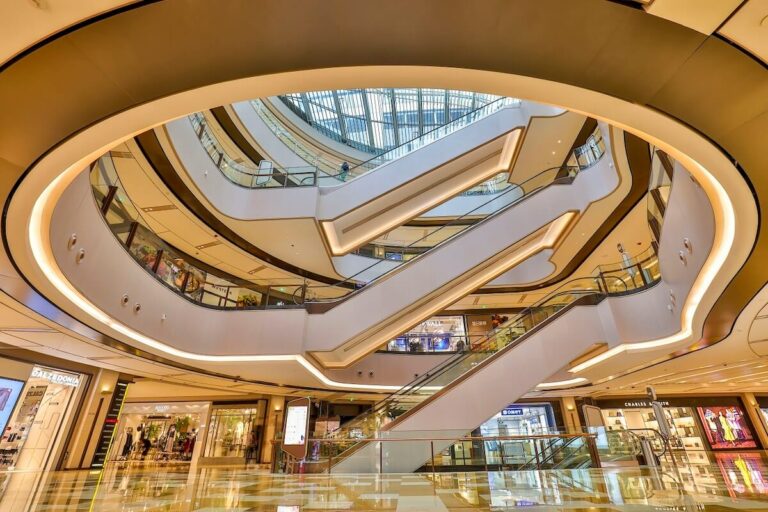
NikeSKIMS, Birkenstock and Starbucks Reserve chose HKRI Taikoo Hui for major China debuts. Why the Shanghai complex keeps winning new…
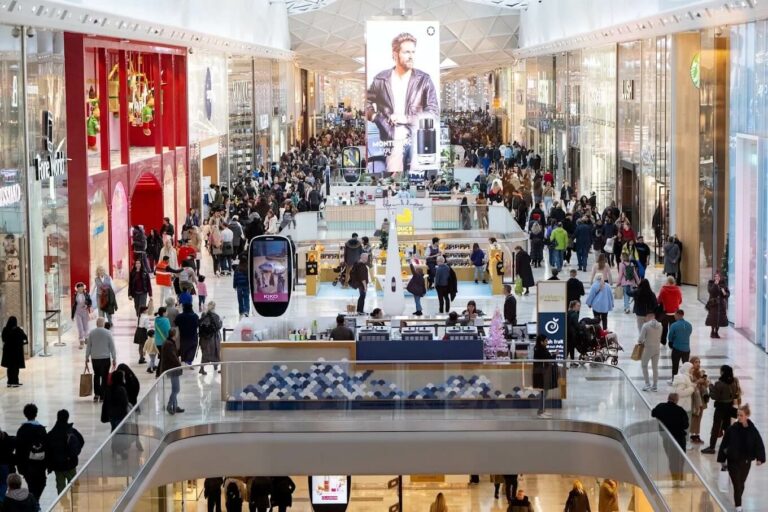
Bluewater opens its first new anchor since 1999. Next takes the former House of Fraser space with about 132,000 square…
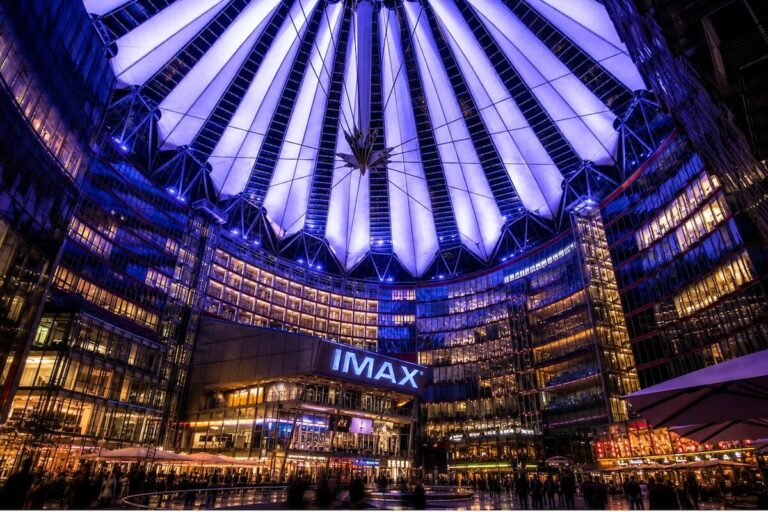
Opening in IMAX 70mm on July 17, 2026: Christopher Nolan's The Odyssey. Select shows went on sale one year in…

European retail is scaling AI, agentic commerce and retail media, but consumer trust is becoming the constraint. Four structural shifts…
Mall operators are no longer leasing space for pop-ups. They are selling audience access.
