
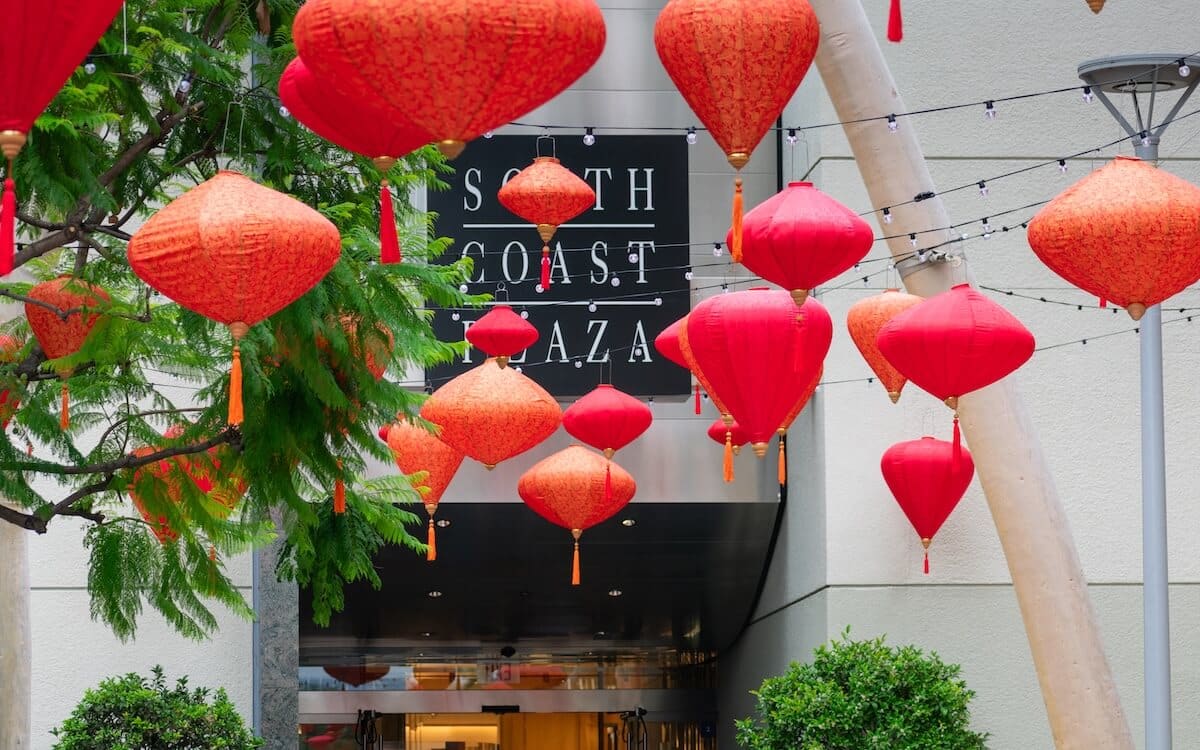
1,051 of 1,173 US malls hold zero ultra-luxury brands. Half of all Cartier, Chanel, Hermès, and Louis Vuitton mall stores fit inside 38 properties.
There are 1,173 shopping malls in the United States. 1,051 of them hold zero ultra-luxury brands.
The 122 properties that do host luxury concentrate it sharply: half of every Cartier, Chanel, Hermès, Louis Vuitton, Dior, Prada, and Goyard mall location in America fits inside 38 of those properties. South Coast Plaza alone holds more luxury brands than the bottom 1,000 American malls combined.
Most of the country does not participate in this layer at all.
Luxury retail in the US does not scale. It concentrates.
For leasing teams, brand expansion directors, and retail real estate investors, understanding which mall sits in which market is the difference between underwriting a luxury asset and underwriting a community center. The two are priced, leased, and grown on different logic.
We mapped 29 ultra-luxury brands across all 1,173 US shopping malls in the Malls.com database. The list includes Louis Vuitton, Cartier, Hermès, Tiffany & Co, Goyard, Gucci, Chanel, Dior, Prada, Bottega Veneta, Saint Laurent, Bvlgari, Van Cleef & Arpels, Loro Piana, Brunello Cucinelli, Loewe, and Tom Ford, among others.
Together they operate 752 US mall locations.
The distribution is not even. 54 percent sit in 38 properties classified Class A++. Another 24 percent sit in 150 Class A+ properties. Combined: 78 percent of all ultra-luxury mall stores in America fit inside 188 malls. The remaining 985 properties hold the other 22 percent.
The pattern is consistent across categories. Cartier operates 28 US mall stores. 100 percent sit in Class A or higher properties. Hermès operates 25, with 24 in Class A+ or A++. Chanel operates 32 stores, 30 of them in the same band. Louis Vuitton operates 67 mall stores in the United States. 60 of them sit in Class A+ or above. Goyard operates three US mall stores in total. All three are in Class A++ properties.
JLL’s Q4 2025 luxury retail report confirms the pattern from a different angle. 80 percent of all new US luxury store openings in 2025 concentrated in just five corridors: Rodeo Drive in Beverly Hills, Madison Avenue and Fifth Avenue in New York, Bal Harbour, and the Miami Design District. The flow of new openings tracks the existing footprint that the 38 already represent.
Methodology: Ultra-luxury defined as 29 global flagship brands operated under LVMH, Kering, Richemont, and equivalent houses. Locations refer to brand presences within mall properties. Dataset: 1,173 US malls in the Malls.com database, 752 verified store presences across the 29 brands.

Two of the five corridors JLL flags are malls. Bal Harbour Shops, only 450,000 square feet of GLA, holds 20 ultra-luxury brands. Miami Design District holds 23. The other three corridors (Rodeo Drive, Madison, and Fifth Avenue) are open-air streets that function under the same real estate logic: brand-portfolio leasing decisions, fixed rent commitments, premium covenants, and tenant curation closer to high-street boutique economics than to traditional mall leasing.
JLL also reports that 48.5 percent of new US luxury openings went to malls in 2024, with the remainder going to street locations. The mall channel for luxury is healthy. It is just narrow.
Within the 38, the concentration is uneven. The top 10 are not just better. They operate under different economics.
South Coast Plaza in Costa Mesa holds 23 ultra-luxury brands. Miami Design District holds 23. The Shops at Crystals in Las Vegas holds 22. Wynn Plaza holds 21. Bal Harbour Shops holds 20. The Galleria Houston holds 19. The Forum Shops at Caesars Palace and Ala Moana Center each hold 18.
The median A++ mall holds 8 to 12 ultra-luxury brands.
The classification is technically the same. The economics are not.
The top 10 function as brand HQ leasing decisions. A leasing deal at South Coast Plaza or Bal Harbour is signed at corporate level, with multi-year planning, integrated portfolio strategy, and rent commitments calibrated to the brand’s global flagship grid. The properties below them in the same A++ tier function as operator leasing decisions, where the mall manages tenant mix and competes for individual brand placements within the broader retail real estate market.
The same brand opens differently in the two layers. Louis Vuitton at South Coast Plaza is a portfolio decision. Louis Vuitton at Tysons Galleria is a market decision. Both are A++. They run on different timetables and different rent expectations.
Below the A class, the same 29 brands hold roughly 22 percent of their US mall portfolio across nearly 1,000 properties. That averages to fewer than one ultra-luxury brand per mall in that segment. Most of those 1,000 malls have zero ultra-luxury tenants.
A mall that competes for Bath & Body Works or Foot Locker competes for a different tenant pool than a mall that competes for Cartier. The two products share a name and a building footprint, but the brand-portfolio decisions, the rent economics, and the customer base are different categories of real estate.
This pattern echoes what The K-shaped mall: why 100 properties are worth more than the other 800 combined documented at the broader sector level. The luxury layer is the most extreme expression of that bifurcation, but the same logic applies down the class spectrum: Class A and below malls compete for different brands, on different rent levels, against different alternatives.
The luxury tenant pipeline does not move evenly across the American mall landscape. It moves between roughly 188 properties.
Leasing teams underwriting on national-average tenant mix are pricing two structurally different products as one. A leasing model that assumes “Class A retail” produces a homogeneous outcome ignores that the 38 operate in an effectively different sector than the next 150 A+ malls, which themselves operate in a different sector than the 985 properties below them.
JLL puts overall US luxury retail vacancy at 4.5 percent against 6 percent for general retail. Inside the 38, the gap widens further. Rolex’s vacancy rate inside the top tier is effectively zero. Hermès does not have available space to expand into in the top corridors. The properties that win these tenants are not competing on rent. They are competing on portfolio fit, co-tenancy quality, and capital investment in the property itself.
This is the same logic that informs how brands decide between malls, high streets, and standalone stores. The format choice is not primarily about rent. It is about brand control, market familiarity, and co-tenancy. For ultra-luxury brands, the mall channel is exclusively the 38 and a handful of A+ properties. Below that line, the format choice is no longer mall versus high street. It is high street, standalone, or no presence at all.
Saks Fifth Avenue at American Dream Mall opened in 2021 and now anchors the property’s luxury repositioning. The next 24 months will determine whether American Dream graduates into the top 38, or remains a category outside it.
Aventura Mall in Miami and The Mall at Millenia in Orlando consistently appear in industry luxury rankings but operate just outside the top 38. Both have capital expenditure underway in luxury wings.
Westfield UTC’s $70 million luxury expansion brings Tom Ford, Saint Laurent, Zegna, and Carolina Herrera to the property in phases through spring 2026.
Phipps Plaza in Atlanta and Mall at Green Hills in Nashville sit in the next tier and sign luxury brands selectively. Whether they consolidate or stall determines the size of the top set in the next cycle.
Luxury retail in the US does not scale. It concentrates.
The American mall is not one market. It is several markets sharing one word.
The 38 hold half the country’s ultra-luxury retail in 3 percent of the property count. The next 150 hold most of the rest. The 985 below them hold a different tenant ecosystem entirely.
If you underwrite them as one market, you are pricing the wrong asset.
The leasing teams that read the layers correctly build portfolios for the next decade. Those that average across the full national mall set compete for the wrong tenant set.
That is the structure.
The vendors and deployments behind shopping advice, store navigation and retail operations, with a closer look at what it takes…
Miss A, Rowan and HEYTEA are on US mall opening lists in fall 2026. Their public records show what each…
Gross margins and selected profit metrics for Coach, Pop Mart, lululemon, Miniso, Five Below, TJX and Costco, plus where each…
NikeSKIMS, Birkenstock and Starbucks Reserve chose HKRI Taikoo Hui for major China debuts. Why the Shanghai complex keeps winning new…
Bluewater opens its first new anchor since 1999. Next takes the former House of Fraser space with about 132,000 square…
Opening in IMAX 70mm on July 17, 2026: Christopher Nolan's The Odyssey. Select shows went on sale one year in…
