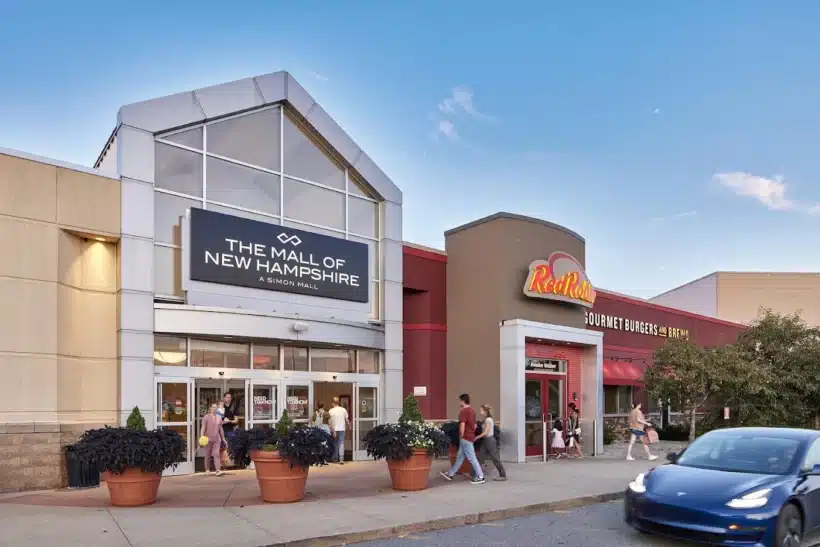
The Mall of New Hampshire is an 803,782 square foot regional mall in Manchester, New Hampshire, operated by Simon Property Group. Classified as an A asset, the property has served the greater Manchester trade area since opening in 1977, with a major renovation in 2006 updating the physical plant to current retail standards.
Manchester is the largest city in New Hampshire and sits at the center of a trade area that extends across Hillsborough County and into the surrounding communities of Nashua, Concord, Bedford, and Londonderry. Southern New Hampshire draws a consumer base that combines suburban households, commuter-adjacent residents, and shoppers from smaller towns with fewer retail options. The absence of a state sales tax in New Hampshire is a structural demand driver that pulls cross-border traffic from Massachusetts, particularly from the communities north of the state line. Manchester functions as the primary retail hub for this corridor, and the Mall of New Hampshire captures a substantial share of that demand.
The anchor lineup includes JCPenney, Macy’s, and Best Buy, covering traditional department store demand alongside consumer electronics, a combination that supports consistent traffic across shopper segments. The supporting tenant base runs across casual and athletic apparel, footwear, beauty, accessories, and specialty retail, with a mix that addresses both family shopping and younger demographics. The 2006 renovation positioned the property to accommodate the national retail formats that define regional mall performance, and the current lineup reflects a center built around accessible branded shopping rather than luxury or outlet positioning. Dining and services complement the retail mix, extending the visit structure beyond single-purpose trips.
For brands evaluating entry into the Manchester market, the Mall of New Hampshire represents the dominant regional platform in the state’s most populated urban center. The sales tax advantage sharpens consumer price sensitivity in ways that benefit value-oriented and mid-market brands, while the trade area’s income and household profile supports consistent discretionary spending. Brands in athletic apparel, footwear, casual fashion, beauty, and family-oriented specialty retail are well-positioned against existing demand patterns here. Simon’s operational scale provides the co-tenancy stability and management infrastructure that support new store performance from opening. A brand establishing its first New Hampshire location will find that this property delivers the broadest possible coverage of the state’s consumer base in a single address.
Sit-down dining at the property includes Buffalo Wild Wings. Quick options include Charley's Philly Steak, Ruby Thai Kitchen, Sarku Japan and Sbarro.
Other attractions at the property include Dave & Buster's.
Records updated 22 July 2026.