
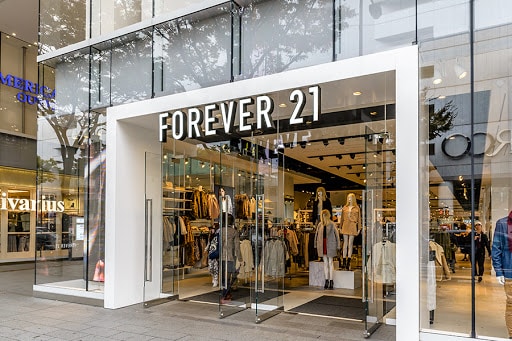
The new owners of the company are Authentic Brands Group, Simon Property Group, and Brookfield Property Group.
Los Angeles-based American fast-fashion brand Forever 21 has officially changed its owner. The new owners of the company became Authentic Brands Group, Simon Property Group, and Brookfield Property Group. Under the terms of the deal, ABG and Simon received 37.5% of operational business and intellectual property, while Brookfield – 25% of the company.
“Forever 21 is a powerful retail brand with an incredible consumer reach and huge untapped potential,” commented ABG founder and CEO Jamie Salter. “We look forward to working with the Forever 21 team and our global partners. Together we will revitalize the core business of the brand and reach out to audiences around the world with new products and expertise.
ABG notes that the new brand strategy will focus on design, speed to market, and movement towards responsible suppliers for Forever 21. The plan will aim to attract customers of Generation Z through targeted digital companies and collaboration with influential people.
The possibility of selling the Forever 21 business became known in early February 2020. Retailer, experiencing severe financial problems, filed for bankruptcy in September 2019. It was reported that the process was a “deliberate and decisive step,” which should have put the company on the path to success in the future. Last year, the company closed down about 200 retail stores around the world. As part of its new development strategy, the brand will continue to operate in the U.S., Europe, China, Southeast Asia, India, and the Middle East on its own, while in other markets it will develop according to its partnership model.
European retail is scaling AI, agentic commerce and retail media, but consumer trust is becoming the constraint. Four structural shifts…
Mall operators are no longer leasing space for pop-ups. They are selling audience access.
Physical stores still drive most retail sales, fulfill online orders, support AI shopping, and help brands return to market.
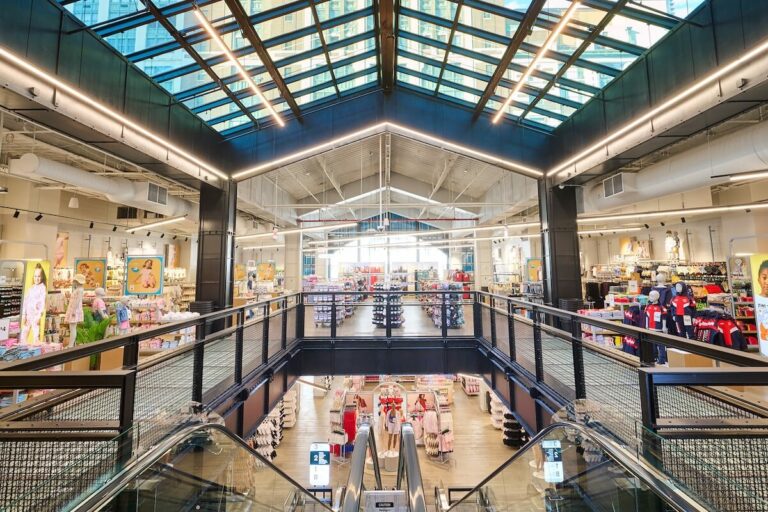
A practical guide to nine mall tenant formats in 2026, from flagships and pop-ups to anchor redevelopment and mixed-use retail.
1,051 of 1,173 US malls hold zero ultra-luxury brands. Half of all Cartier, Chanel, Hermès, and Louis Vuitton mall stores…
Every physical expansion decision starts with the same question: where does the store go?
Verified signals on brand expansion, store openings, and mall development. Free.
Free · No credit card · Unsubscribe any time
