
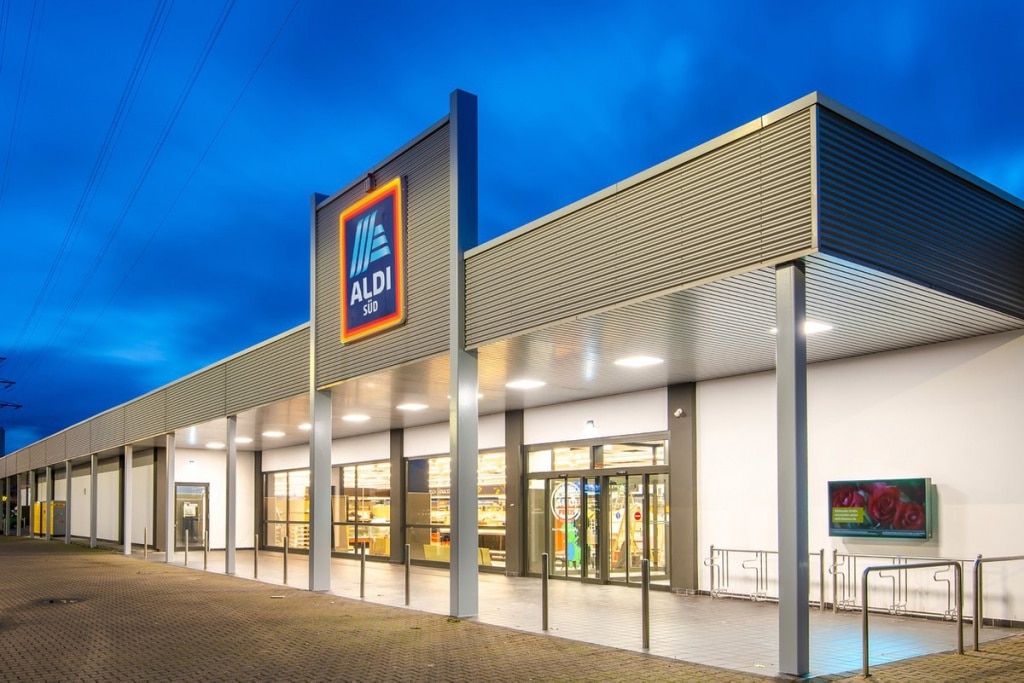
The giant store, located in the German city of Mülheim an der Ruhr, has an impressive area of almost 2000 square meters.
The new Aldi is twice the size of the average area of the chain’s hypermarkets. For comparison, the smallest Aldi is in Nuremberg, with an area of 400 square meters.
The hypermarket appeared due to the merger of two objects: the actual store Aldi, which has existed since 1993, and the adjacent site, where the retail area has increased by about 300 square meters. After the transformation, the total area is now 1940 square meters.
The range of products presented remains familiar, but beyond that, there is much more space. Visitors to the new hypermarket are waiting for a vast area with seven aisles, a width of 30 meters, and a length of 60 meters. And in the fresh food department, there are 70 meters of refrigerated shelving.
Another huge Aldi feature will be a department called “Meine Backwelt,” which translates as “My world of baking.” It features bakery products baked right away, several times a day. Perhaps most of the attention is drawn to the herb garden – the store grows and collects six different types of herbs.
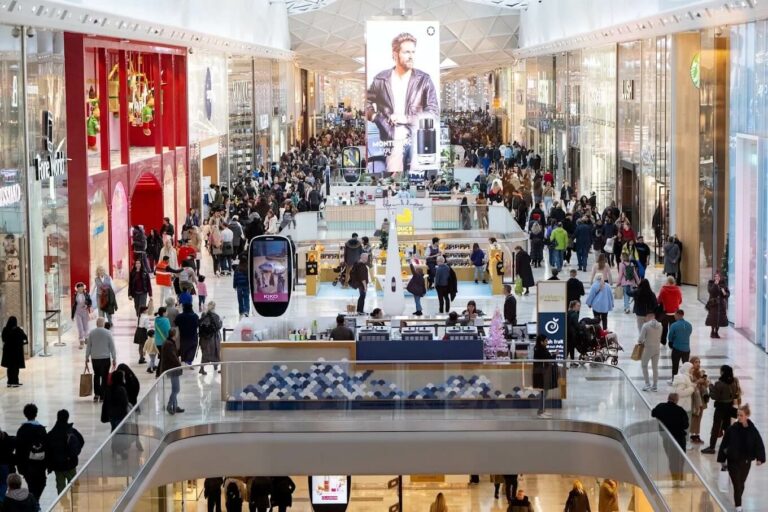
Bluewater opens its first new anchor since 1999. Next takes the former House of Fraser space with about 132,000 square…

Opening in IMAX 70mm on July 17, 2026: Christopher Nolan's The Odyssey. Select shows went on sale one year in…

European retail is scaling AI, agentic commerce and retail media, but consumer trust is becoming the constraint. Four structural shifts…

Mall operators are no longer leasing space for pop-ups. They are selling audience access.
Physical stores still drive most retail sales, fulfill online orders, support AI shopping, and help brands return to market.
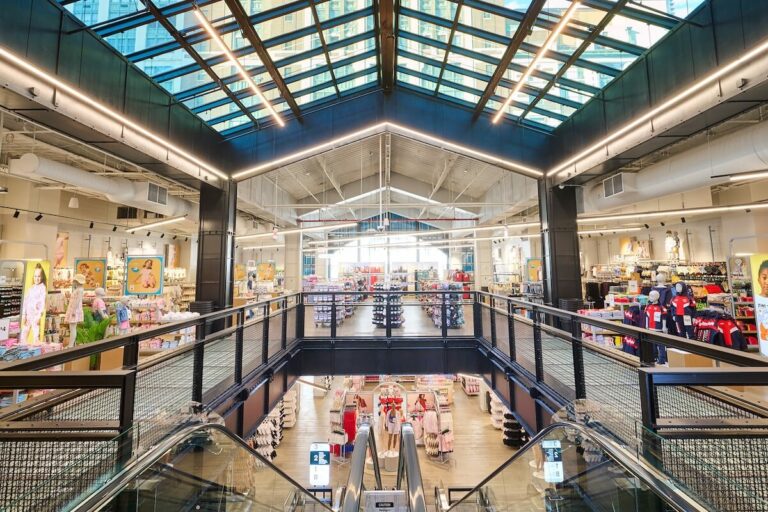
A practical guide to nine mall tenant formats in 2026, from flagships and pop-ups to anchor redevelopment and mixed-use retail.
Verified signals on brand expansion, store openings, and mall development. Free.
Free · No credit card · Unsubscribe any time
