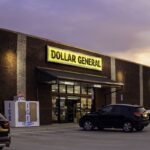
Dollar General is a leading value retailer operating thousands of stores across the United States, offering everyday essentials and merchandise at discount prices.
The largest US discount retailer by store count, Dollar General operates more than 20,000 stores across 48 states, with a 2025 store-opening program of approximately 800 new locations representing the most aggressive net-add cadence in modern US retail. The company is headquartered in Goodlettsville, Tennessee and trades on the New York Stock Exchange under DG, with no controlling shareholder following multiple private-and-public ownership transitions through its history.
J.L. Turner and his son Cal Turner Sr. founded the company in 1939 in Scottsville, Kentucky as J.L. Turner & Son Wholesale, with the first Dollar General store opening in 1955 in Springfield, Kentucky around a defining all-merchandise-under-one-dollar concept. Kohlberg Kravis Roberts took the company private in a $7.3 billion buyout in 2007 before returning it to public markets in 2009. The product range covers consumables (representing approximately 80% of net sales), seasonal merchandise, home products, and apparel, positioned at price points typically 20-40% below traditional grocery and drugstore retail. Dollar General reported net sales of approximately $40.6 billion in fiscal year 2024 (ended January 31, 2025), serving primarily lower-income and rural-market customers underserved by traditional grocery chains. The Popshelf banner targets a higher-income suburban customer with a curated home-and-lifestyle assortment at $5-and-under price points, operating approximately 230 locations as a complementary growth concept.
Dollar General stores are concentrated in small-town and rural America, with approximately 75% of locations within 5 miles of where the target customer lives. The typical store footprint is 7,400 to 9,500 square feet on standalone freestanding pads with surface parking, occupying secondary retail strips, freestanding corner positions, and former pharmacy or convenience-store sites. The chain is rarely an in-mall tenant by design. For mall operators, the relevance is indirect: Dollar General’s continued small-town concentration removes pressure from competing value retail in larger markets, while the Popshelf concept’s selective placement in suburban lifestyle centers represents the group’s only meaningful enclosed-mall and lifestyle-center adjacency strategy.