
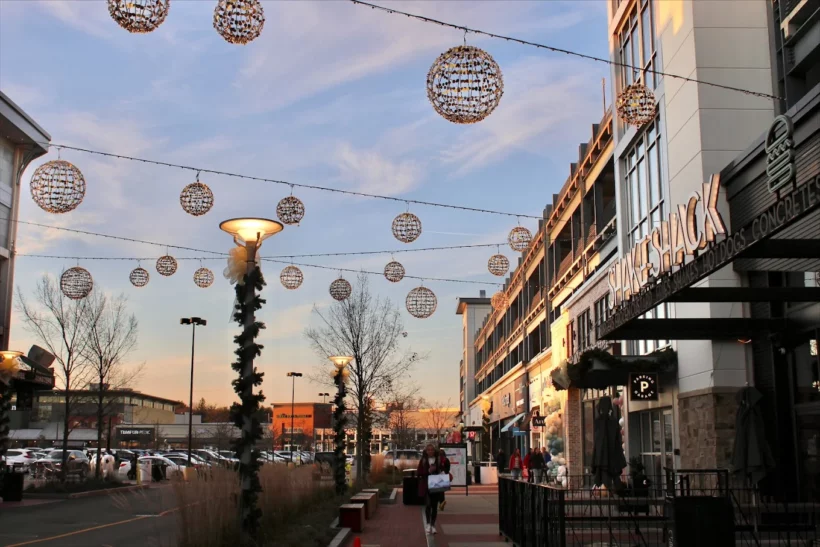
Legacy Place is a 385,000 square foot open-air lifestyle center in Dedham, Massachusetts, operated by WS Development. Classified as an A+ asset and opened in 2009, the property is built around a format that prioritizes contemporary retail over traditional department store anchors, assembling a tenant base oriented toward active, design-conscious consumers.
Dedham sits at the intersection of Route 1 and I-95, placing Legacy Place within direct reach of some of the most affluent suburban communities in the Boston metropolitan area. The trade area pulls from Needham, Westwood, Canton, and Milton, zip codes that consistently post household income figures well above state and national medians. The property also draws from the broader Southwest Boston corridor, where density and purchasing power combine to support premium retail at sustained volume. For brands expanding in New England, this location functions as a gateway to the high-income suburban ring that surrounds Boston without requiring a position in the city itself.
The anchor roster defines the property clearly. Nike, lululemon, and Vuori establish athletic and wellness retail as the dominant category, supported by a concentration of fashion tenants including Mango, Aritzia, and Rothy’s that extend the merchandise offering across contemporary apparel and footwear. Sephora grounds the beauty segment, Warby Parker covers optical and accessories, and Barnes & Noble anchors the cultural and experiential dimension of the center. Shake Shack rounds out a dining presence that supports dwell time without shifting the property toward a food-forward format. Taken together, the mix describes a shopper with strong discretionary income, a preference for brand-forward retail, and consistent engagement with wellness, fashion, and personal care. There are no traditional department stores here; visit frequency is driven by the tenant lineup itself rather than a single large-format draw.
For brands evaluating suburban Boston, Legacy Place presents entry conditions shaped by the open-air format and the existing tenant composition. The center does not position around luxury exclusivity, but the income profile of the surrounding trade area supports pricing above the mass market. Athletic, wellness, and contemporary fashion brands with direct-to-consumer strength fit the existing shopper pattern most directly. Beauty, accessories, and casual dining concepts also have clear runway given how the current tenant base performs. The outdoor format demands operational readiness for New England seasonal conditions, and merchandise depth matters more here than in enclosed formats where foot traffic is more forgiving. Brands that succeed at Legacy Place tend to bring focused assortments, strong brand identity, and price points that align with an affluent suburban consumer who is already shopping the center regularly. The primary competitive advantage this location offers is consistent access to one of the most financially productive suburban trade areas in the Northeast.
Sit-down dining at the property includes The Capital Grille and Yard House. Quick options include CAVA, Shake Shack and Sweetgreen.
Yes. Showcase Cinema de Lux operates inside Legacy Place. For showtimes, use the Showcase Cinema de Lux website or app.
Yes. Solidcore and Pure Barre operate at the property.
Other attractions at the property include The Escape Game.
Records updated 22 July 2026.

