
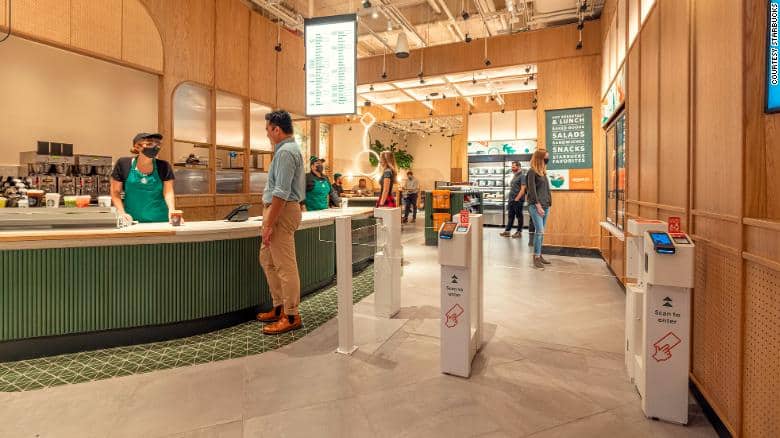
Orders are taken through a mobile app, and coffee can be drunk at a table or taken to go.
The first joint Amazon Go and Starbucks store opened in New York City. The outlet operates on a cashless service model. Customers can place and pay for their order by selecting Starbucks on “59th between Park & Lex w/ Amazon Go” as their desired location in the app. Once the customer arrives at the location, they can find the status of their order on a digital screen in the store and then pick up their order directly from a Starbucks barista.
To enter the Amazon Go market and store’s lounge seating, customers can use the “In-Store Code” in the Amazon app, Amazon One, or a credit card, and then shop the Amazon Go market like any other Amazon Go store. Once inside, any item that the customers remove from the shelf is automatically added to their virtual cart. Any item they return on the shelf comes out of their virtual cart. When a customer is done shopping, they can either sit in the lounge area to enjoy their Starbucks beverage and food item selected from the Amazon Go market or be on their way. After the customer leaves the Amazon Go market, their card will be charged, and they can access their receipt within a few hours, sometimes faster.
The store features snacks from the typical Starbucks specials, but the offerings are also complemented by specials from partners, such as Ess-a-Bagel and Dominique Ansel.
Amazon uses unique smart cameras based on machine learning and artificial intelligence to control operations. However, for the Starbucks drinks, payment is accepted through the app or at the barista counter.
“There’s a place where you can connect, where you can hang out, socialize, and have meetings,” commented Katie Young, Starbucks’ senior vice president of Global Growth and Development.
The partners are ready to scale the new format slowly. It is confirmed that two more joint coffee shops will open in 2022, including a second location in New York City.
European retail is scaling AI, agentic commerce and retail media, but consumer trust is becoming the constraint. Four structural shifts…
Mall operators are no longer leasing space for pop-ups. They are selling audience access.
Physical stores still drive most retail sales, fulfill online orders, support AI shopping, and help brands return to market.
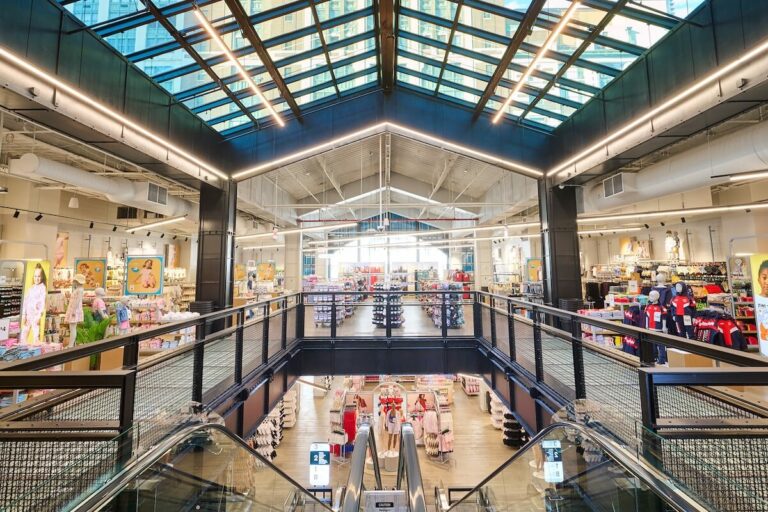
A practical guide to nine mall tenant formats in 2026, from flagships and pop-ups to anchor redevelopment and mixed-use retail.
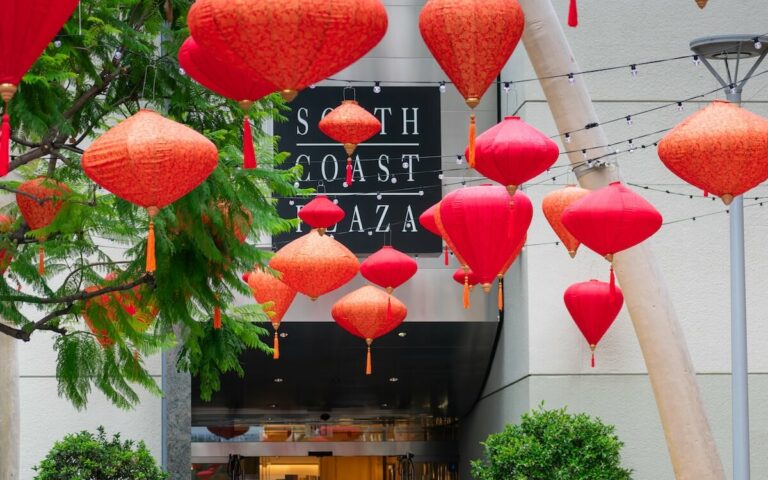
1,051 of 1,173 US malls hold zero ultra-luxury brands. Half of all Cartier, Chanel, Hermès, and Louis Vuitton mall stores…
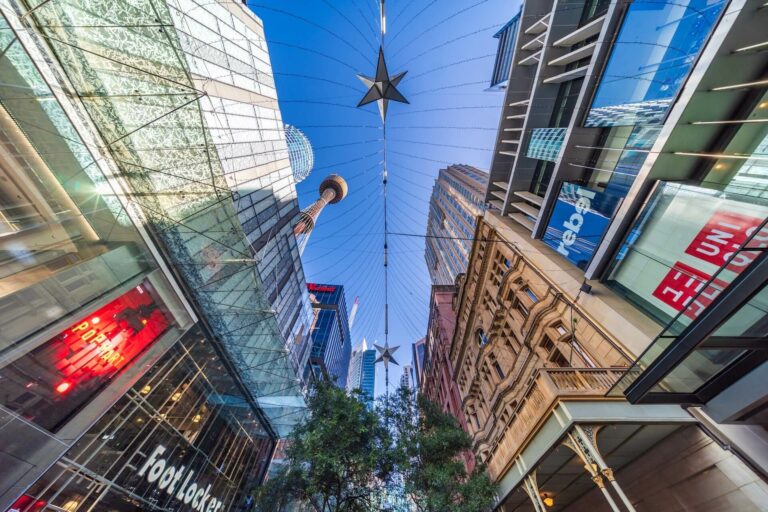
Every physical expansion decision starts with the same question: where does the store go?
Verified signals on brand expansion, store openings, and mall development. Free.
Free · No credit card · Unsubscribe any time
