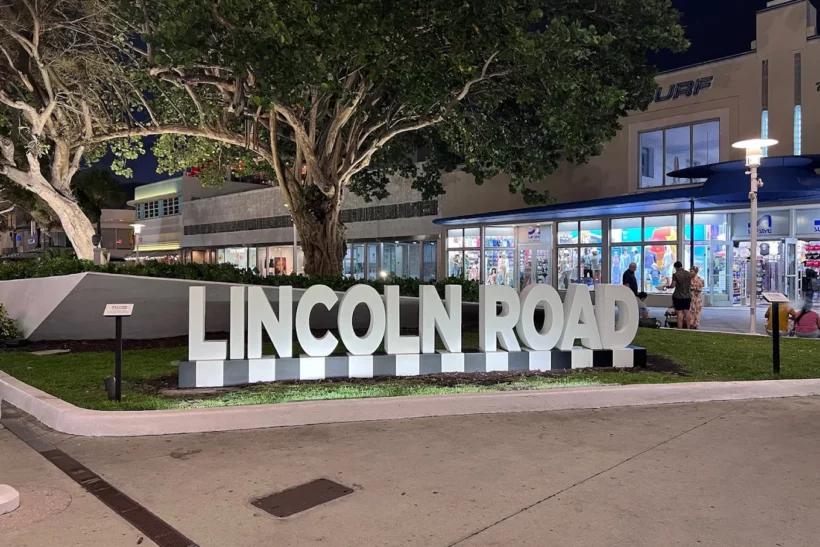
Lincoln Road in Miami Beach is an eight-block pedestrian retail district rather than a single-ownership mall — a distinction with significant commercial implications. The street operates under multiple landlords, coordinated in part through the Lincoln Road Business Improvement District and governed by Miami Beach city zoning and design controls. There is no unified leasing authority, no single anchor strategy, and no standardised tenant approval process. What exists instead is a market-driven retail street whose commercial character is shaped by the convergence of Miami Beach’s tourism economy, year-round subtropical climate, and the spending patterns of an extraordinarily diverse international visitor base.
Miami Beach’s hotel inventory generates a consistent international visitor flow — South American, European, Canadian, domestic US — with spending across all price points and an orientation toward dining, fashion, and experience purchases. The evening and weekend footfall in peak season generates street traffic that rivals enclosed mall properties on a per-linear-metre basis, sustained entirely by the outdoor format and the density of F&B and entertainment operators that the district supports. South Beach’s iconic architecture and public realm serve as the primary traffic driver, making Lincoln Road a beneficiary of Miami Beach’s global tourism positioning.
The brand mix reflects the dual audience of tourists and upper-income Miami Beach residents: Zara, H and M, Anthropologie, lululemon, and Banana Republic serve the accessible and contemporary premium segment. Luxury jewellery, sunglasses retailers, and fashion boutiques serve the tourist discretionary spend. The F&B density is among the highest of any retail street in Florida — French, Italian, Japanese, Cuban, and Pan-Latin concepts across all price points sustain the evening dwell time that drives adjacent retail visits.
For expansion teams evaluating Miami Beach market entry, Lincoln Road occupies a category distinct from any enclosed mall in the market: street retail format, multiple-landlord lease environment, peak-season pedestrian volume that can exceed enclosed mall benchmarks, but without the anchor-driven comparison-shopping dynamic, uniform tenant mix standards, or single-call leasing process that mall formats provide. Lease terms, rent structures, and co-tenancy rationale differ substantially from mall-format retail and require a street-specific evaluation framework.