
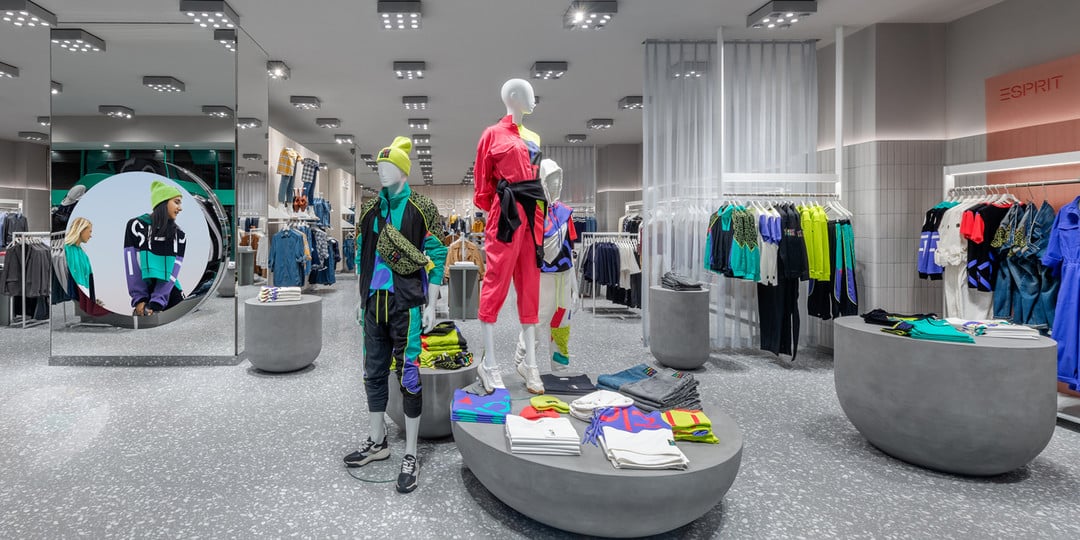
Esprit’s French subsidiary follows European collapse.
Esprit de Corp France has filed for bankruptcy and entered judicial reorganization, marking another blow for the beleaguered fashion brand. The Nanterre Commercial Court made the ruling on July 18, just two months after Esprit’s European operations in Germany declared bankruptcy on May 15.
Bankruptcies in Germany and beyond
Esprit Europe, along with six other German subsidiaries, filed for bankruptcy in May. In 2023, Esprit’s owner attempted to revitalize the brand by injecting fresh creative energy from the United States, aiming for a brand overhaul. However, these efforts have not yielded the desired results.
The company’s subsidiaries in Switzerland and Belgium also filed for bankruptcy earlier this year, in March and April, respectively.
Rising costs and legacy burdens
In May, Esprit attributed its financial troubles to escalating costs driven by inflation, rising interest rates, and soaring energy prices, compounded by the lasting impact of the COVID-19 pandemic and international conflicts. The brand also cited “legacy costs” as a significant burden, including high rents and poorly utilized store spaces.
Grim outlook despite 2022 revenue
In 2022, Esprit de Corp France reported a turnover of over €40 million, managing to break even while employing 132 people. Despite these figures, the outlook remains bleak, with a six-month observation period now in place. The brand is struggling to find international buyers, casting further doubt on its future viability.

Gross margins and selected profit metrics for Coach, Pop Mart, lululemon, Miniso, Five Below, TJX and Costco, plus where each…

NikeSKIMS, Birkenstock and Starbucks Reserve chose HKRI Taikoo Hui for major China debuts. Why the Shanghai complex keeps winning new…
Bluewater opens its first new anchor since 1999. Next takes the former House of Fraser space with about 132,000 square…

Opening in IMAX 70mm on July 17, 2026: Christopher Nolan's The Odyssey. Select shows went on sale one year in…

European retail is scaling AI, agentic commerce and retail media, but consumer trust is becoming the constraint. Four structural shifts…

Mall operators are no longer leasing space for pop-ups. They are selling audience access.
