
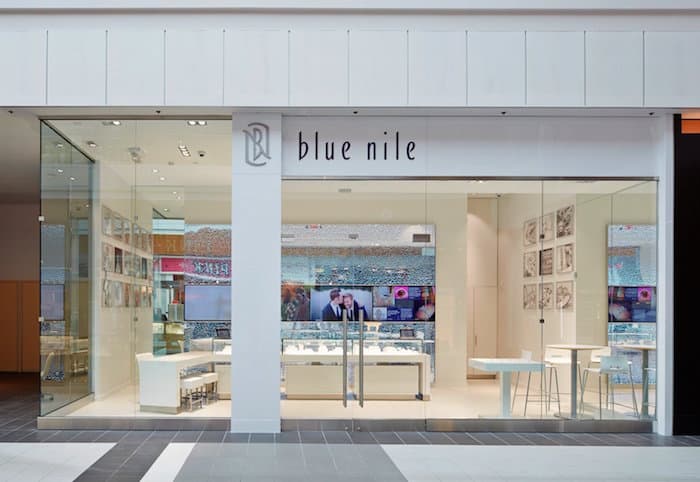
Nordstrom housed a 325-square-foot trial store of online diamond retailer Blue Nile.
Small “Webroom” with a several staffers, grew out of the Seattle retailer’s experiments with temporary counters inside a couple of Nordstrom stores. It also draws on the experience accumulated by placing kiosks at wedding shows in China — wildly popular fairs that helped drive a 50 percent yearly increase in Blue Nile’s sales there.
There will be only three cases of product, showcasing ring styles. When customers come, they’re led to a bar (“our version of the Genius bar,” says CEO Harvey Kanter) where the employees walk them through the company’s 250,000 stones on an oversized tablet. As part of Blue Nile’s no-pressure mantra, the employees are not on commission.
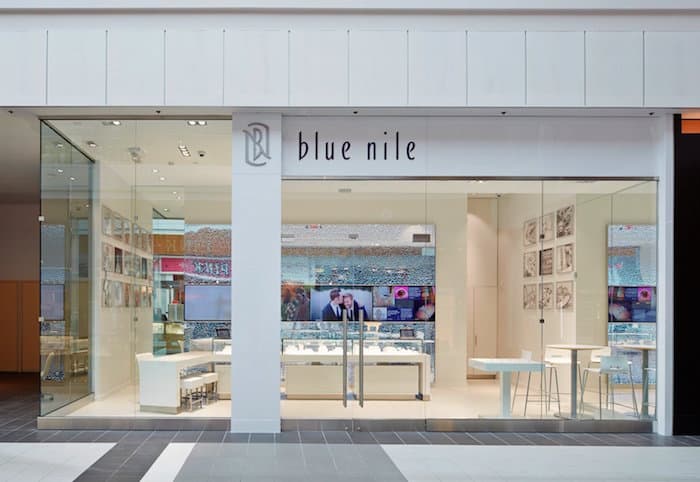
All sales are still made online — but the goods can be ordered and picked up at the store, which will also offer free cleanings and repair.
Kanter says that Blue Nile decided to place the store at the Roosevelt Field mall because of the successful trial there in Nordstrom, but also because Simon Property Group, the mall’s owner, is aggressively courting pure-play e-commerce retailers to establish physical outlets.
For Blue Nile, which made its name selling discounted diamonds through the Internet, the store is a way to increase its knowledge about the brick-and-mortar world.
For instance, from its Nordstrom experience the company learned that customers who purchased items after visiting spent an average of 8 percent more than the average web-only shopper.
Gross margins and selected profit metrics for Coach, Pop Mart, lululemon, Miniso, Five Below, TJX and Costco, plus where each…
NikeSKIMS, Birkenstock and Starbucks Reserve chose HKRI Taikoo Hui for major China debuts. Why the Shanghai complex keeps winning new…
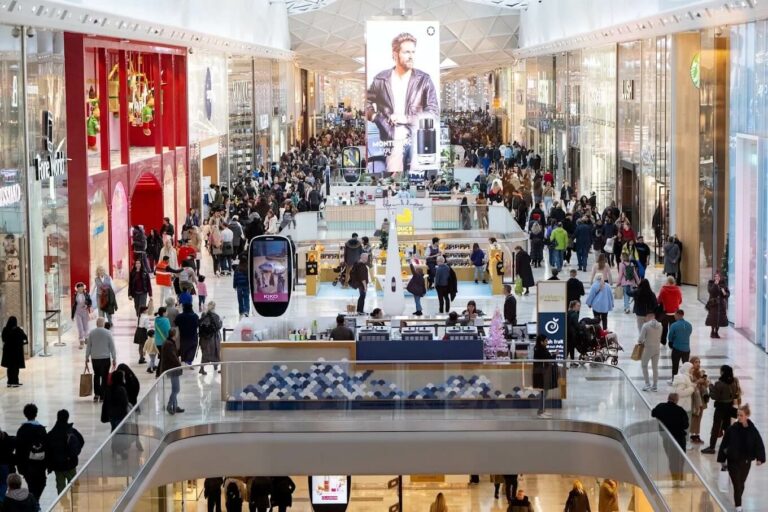
Bluewater opens its first new anchor since 1999. Next takes the former House of Fraser space with about 132,000 square…
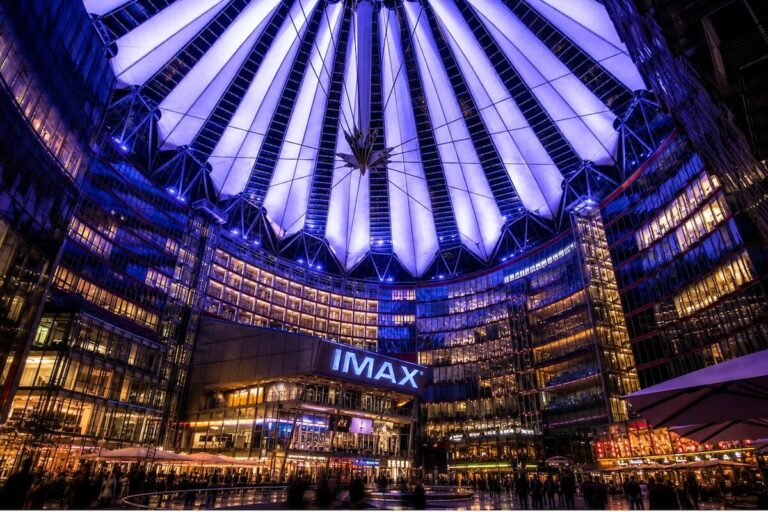
Opening in IMAX 70mm on July 17, 2026: Christopher Nolan's The Odyssey. Select shows went on sale one year in…

European retail is scaling AI, agentic commerce and retail media, but consumer trust is becoming the constraint. Four structural shifts…
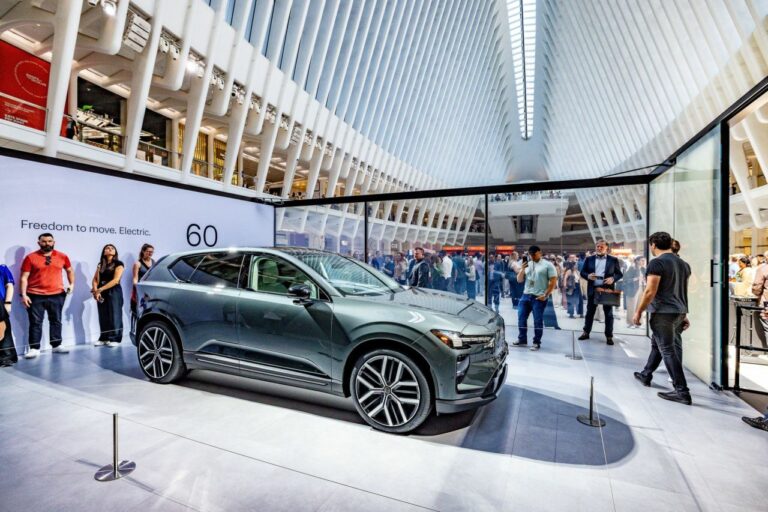
Mall operators are no longer leasing space for pop-ups. They are selling audience access.
