

Due to the closure of most stores, the company’s profit in the first quarter fell by 96% year-on-year.
As Kasper Rorsted’s CEO told reporters, the first two months of the quarter were quite reasonable. And then in March, there was a sharp decline, when revenues literally “fell like a rock”. Sales fell immediately by 19% to 4.75 billion euros. Even though online sales have recently increased to 35%, they could not even close to replacing closed stores. In total, the company was forced to close about 70% of its stores worldwide.
As a result, net profit for the first quarter was 26 million euros, which is 96% less than the year before. However, due to the uncertainty about the duration of the closure, the company will not be able to provide a forecast for the entire year.
The company expects that in the second quarter its revenue will be 40% lower than last year. But on the whole, Adidas is in a positive mood. According to Rorsted, despite the current situation, the sports goods industry will develop favorably in the medium term due to increased attention to health and fitness around the world. In his opinion, after spending about ten weeks locked up, people will have a powerful desire to go outside and engage in physical activity.
Also, according to Rorsted, recent business results in China give a hint of how things are going to happen around the world. In this country, the growth in online and offline sales was robust, as it was in March, and the same trend continued in April.

Gross margins and selected profit metrics for Coach, Pop Mart, lululemon, Miniso, Five Below, TJX and Costco, plus where each…

NikeSKIMS, Birkenstock and Starbucks Reserve chose HKRI Taikoo Hui for major China debuts. Why the Shanghai complex keeps winning new…
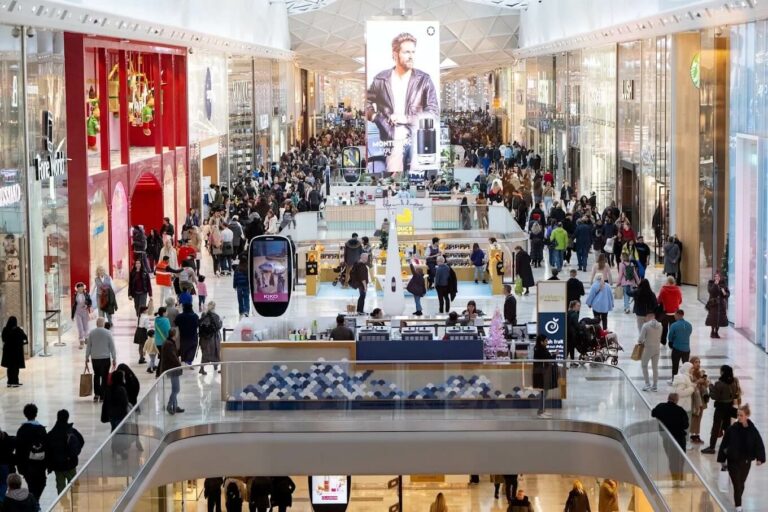
Bluewater opens its first new anchor since 1999. Next takes the former House of Fraser space with about 132,000 square…

Opening in IMAX 70mm on July 17, 2026: Christopher Nolan's The Odyssey. Select shows went on sale one year in…

European retail is scaling AI, agentic commerce and retail media, but consumer trust is becoming the constraint. Four structural shifts…

Mall operators are no longer leasing space for pop-ups. They are selling audience access.
