

Review about the story and business strategy of Inditex Group, the owner of Zara brand, and its founder Amancio Ortega
This article examines Zara and its parent company, Inditex, as described in an October 2014 report published by The Telegraph. Store counts, operating practices and expansion plans below refer to that period.

On one side of the room there is a digital mirror which allows you to try on clothing without removing it from the shelf. Right next to it is a self-service checkout where you can pay for your items and remove any security tags without requiring assistance from personnel. These are technologies being tested in Inditex’s retail studio in 2014.
They are in a room filled with new technology, located in a massive industrial complex in Arteixo, a small town based in northern Spain. This industrial estate may look like any other across the globe, but the difference here is that it is home to the Inditex fashion group. This is a company which has expanded the boundaries of what can be expected from a clothing store on the high street.
This offers a rare insight into the world of Zara’s owner, Inditex. The group relies heavily on information from store managers and sources part of its production from European and nearby markets.
Inditex is known for being guarded in its dealings with the press, reflecting the approach of founder Amancio Ortega. He was born in northern Spain during 1936 to a humble home and became one of the world’s wealthiest businesspeople. Ortega, with his business partner, Rosalia Mera, opened their first store in A Coruna, close to Arteixo, during 1975. Their first choice for their store name was Zorba, as Zorba the Greek was their favorite movie, but a bar down the road had already claimed the name. As the name Zorba was already on their store, they wanted to make use of as many of the letters and that is how Zara came into being.
This flexibility is part of the operating model of Inditex, Zara’s parent company. Contemporary reporting put the group’s network at approximately 6,500 stores in 88 countries across eight brands, including Zara, Massimo Dutti, Pull&Bear and Bershka.
Ortega operates a unique business model. The stores across the globe receive two deliveries per week and the products designed at the head office are delivered to stores three weeks later. This is a tight turnaround time, which is aided by the fact that between 51% and 55% of clothing was manufactured, according to the contemporary report, in what is called ‘proximity’ markets, Portugal, Morocco, Spain and Turkey, rather than in Asia.
The success of the company can be attributed to the link between its in-house designers, stores and factories. Store managers submit orders to headquarters twice a week, based on sales data and what shoppers like and dislike. The order is compiled by the commercial team, after they have added in new products and balanced it with demand from other stores. It is then sent on to the manufacturing division, which results in the store receiving their order within two days.
Simultaneously, the commercial team works hand-in-hand with the in-house designers, who are located next to them at the Inditex HQ. Once sales trends have been identified, either from the catwalk or store evidence, the two teams work together to develop products to meet these trends. New fashion trends are produced in small quantities, which makes it easy to discard flops after their initial appearance or to follow up successful trends quite rapidly.
The design and commercial teams are huge. This structure allows the product range in Zara stores to evolve quickly. Instead of relying on a single product range for each season, the retailer produces successive batches of new products after the initial launch of the season. Store managers and the commercial team are able to examine the new ranges in a mock high street of stores, which is built into the HQ setting.
The store managers have great influence and this means that they are paid more than the average for the industry. They are also able to earn 100% of their salary in bonuses offered when they hit their sales targets. The report described Zara’s distribution model as routing clothing through Spain, even if it was manufactured in China for a Chinese store. At the base in Arteixo, which houses 6000 staff from 30 countries, there is a carousel within a tunnel network which moves the clothing from the factories on-site, which produce 5% of the products, to the massive distribution area. The clothes continue their travel along the carousel in the distribution center until it reaches its allocated box. The boxes are marked for individual stores and are packed with different product types, which will reach its destination within 36 to 48 hours.
This speed and flexibility is what has helped the company to expand overseas. It can adapt quickly if clothing is not selling in a particular store.
The company is still in the expansion process. The group has continued to add retail space and expand its international store network. It regularly opens new stores in over sixty countries globally on an annual basis.
The report put Inditex’s planned annual selling-space growth at 8% to 10% over the following three to five years. The group had 99 stores in the UK and 450 in China at the time. Chief executive Pablo Isla described China as a market that could eventually overtake Spain within the group.
This road shows the distance the company has come since its first store was opened in A Coruna where it still sits next door to a dentist, on a street corner. The methods adopted by the company have remained the same, which is evident by Ortega who still owns about 60% and although he now holds a non-executive board position, he still enjoys lunch in the staff cafeteria on a daily basis.
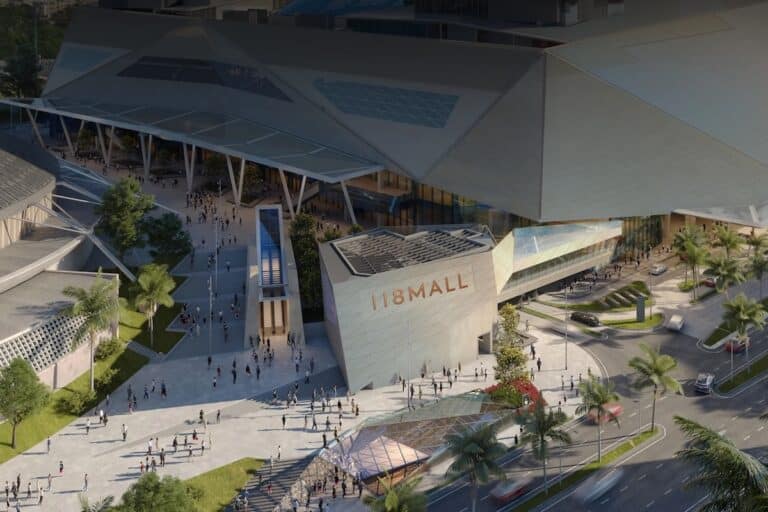
Compare 18 open-air malls, retail parks and enclosed projects across the US, Europe, Asia and the Middle East, with sizes,…
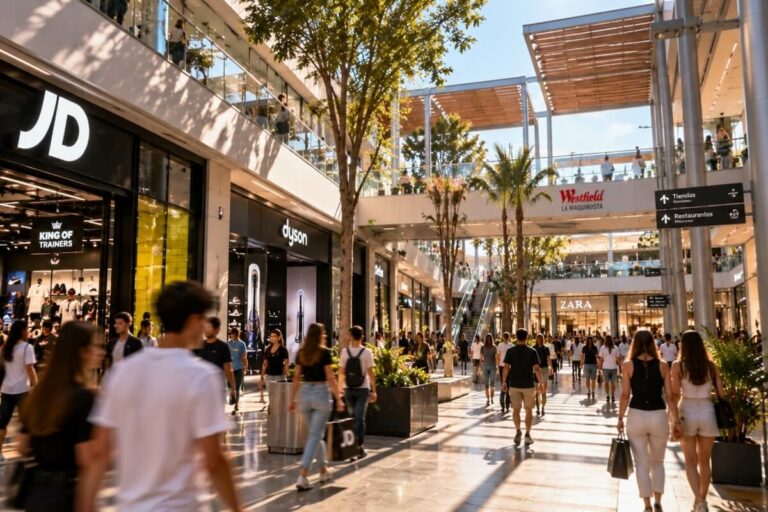
The vendors and deployments behind shopping advice, store navigation and retail operations, with a closer look at what it takes…
Miss A, Rowan and HEYTEA are on US mall opening lists in fall 2026. Their public records show what each…
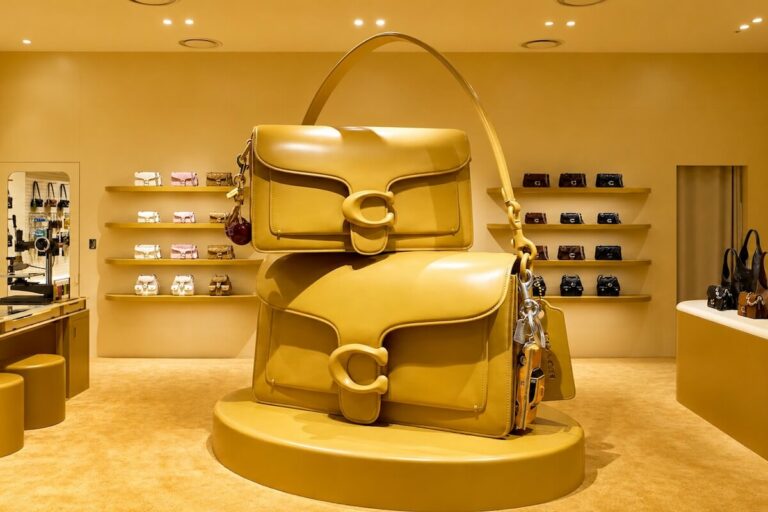
Gross margins and selected profit metrics for Coach, Pop Mart, lululemon, Miniso, Five Below, TJX and Costco, plus where each…
NikeSKIMS, Birkenstock and Starbucks Reserve chose HKRI Taikoo Hui for major China debuts. Why the Shanghai complex keeps winning new…
Bluewater opens its first new anchor since 1999. Next takes the former House of Fraser space with about 132,000 square…
