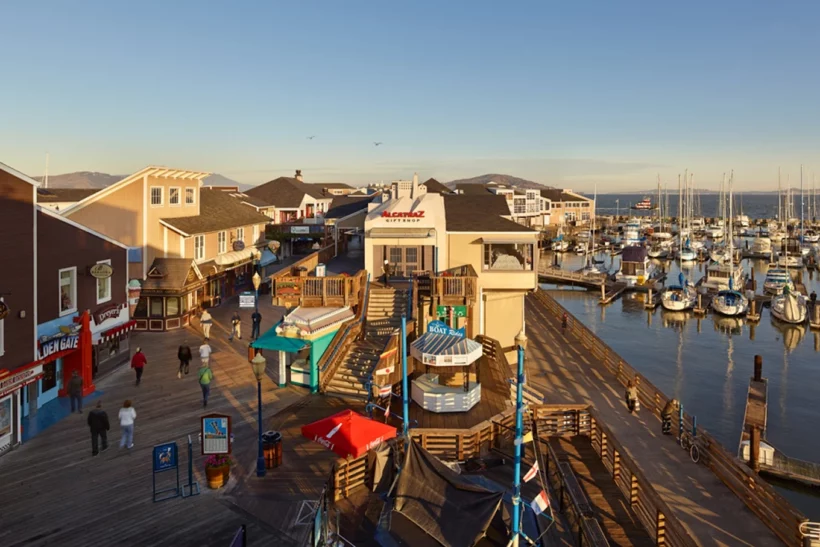
Built over the water at the foot of Beach Street at Embarcadero in San Francisco, Pier 39 operates as the most visited tourist destination retail complex on the West Coast. The two-level shopping structure, sea lion colony viewing platform, and waterfront dining configuration generate foot traffic that is driven entirely by the tourism occasion and the Fisherman’s Wharf destination rather than the retail tenant mix itself. Opened in 1978, Pier 39 has historically ranked among San Francisco’s highest-volume visitor attractions, drawing millions of local, national, and international visitors annually, with international and domestic leisure travelers forming the primary customer base. The resident and local shopper is structurally absent from the customer profile, which defines the leasing environment as tourism-capture retail at price points and category formats appropriate to the international leisure visitor.
The tenant mix reflects the tourism-supplement retail model: regional specialty food brands, San Francisco souvenir and gift formats, Boudin Bakery as the property’s signature dining presence, and operators whose concepts draw on the waterfront location and seafood category. FlyOver San Francisco, the motion-simulation flight experience, anchors the paid entertainment tier as a destination attraction that drives dedicated visits from tourists staying across the city. The two-story carousel at the pier’s entrance and the Aquarium of the Bay produce the multi-hour visit pattern that converts tourism traffic into retail and dining occasion spending. The sea lions at K Dock, a permanent wildlife attraction, generate a stop-and-linger dynamic at the pier’s west end that channels visitors through the retail level.
For brands and operators evaluating San Francisco tourist corridor positioning, Pier 39 provides the highest-concentration tourist foot traffic location on the northern waterfront. The trade-off is the complete absence of the San Francisco resident as a customer, which limits category performance to formats that index to gift, souvenir, specialty food, and dining rather than planned apparel, home, or electronics purchases. Brands whose tourist-occasion performance is a strategic objective rather than incidental will find Pier 39’s multi-million-visitor scale and international customer concentration a structurally distinct operating environment from any other California retail property.