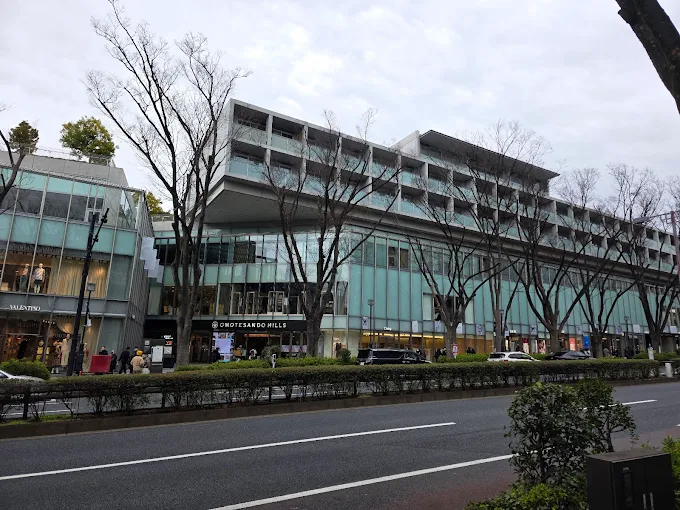
Omotesando Hills is a 11,400 square meter low-rise retail complex on Omotesando Avenue in Shibuya Ward operated by Mori Building, opened in February 2006 on the site of the Dojunkai Aoyama Apartments built in 1927 after the Great Kanto Earthquake. Classified A+ in the Malls.com framework, the property is built around a single architectural decision that defines its retail format: Tadao Ando’s spiral ramp design, which replaces conventional floor levels with a continuous ascending and descending pedestrian path running six floors from basement to upper retail, three above ground and three below. The exterior follows the Omotesando zelkova tree height limit, preserving the avenue’s tree-lined character.
The Omotesando-Aoyama corridor concentrates Tokyo’s densest stretch of architectural luxury retail, between the Louis Vuitton Omotesando flagship by Jun Aoki, Prada Aoyama by Herzog and de Meuron, Dior Omotesando by SANAA, and the Tods Omotesando building by Toyo Ito. Omotesando Hills sits in the middle of this stretch as Mori Building’s contribution to the architectural retail ensemble. The trade area draws weekday traffic from the broader Aoyama design and fashion industry, weekend traffic from Harajuku and Shibuya, and inbound architectural and luxury tourism. Omotesando Station handles approximately 260,000 daily passengers across the Ginza, Chiyoda, and Hanzomon Lines. Surrounding Shibuya Ward ranks in the top quintile of Tokyo wards by household income.
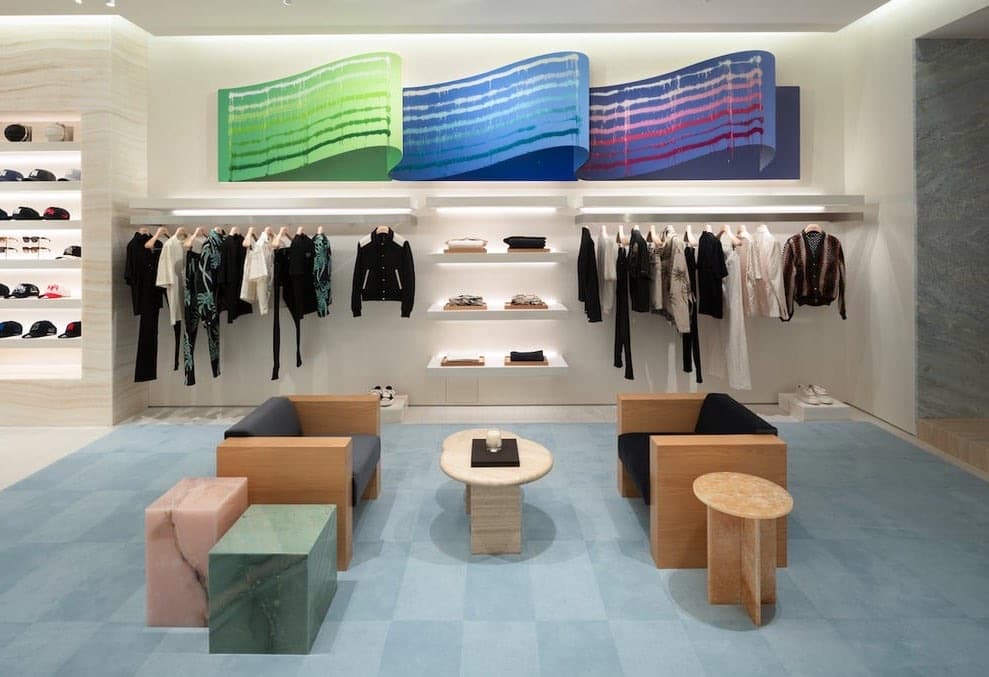
The retail mix concentrates contemporary fashion concept stores and accessories across approximately 100 tenants, weighted toward Japanese designers including Yohji Yamamoto secondary lines and small Western labels alongside flagship outlets. The format favors compact storefronts of 30 to 80 square meters rather than the 200 to 400 square meter formats typical of the avenue’s standalone luxury flagships. The merchandising mix targets the design-aware shopper rather than the gift-driven Ginza profile, with the Tadao Ando architecture itself functioning as the property’s primary cultural traffic anchor.
For brands evaluating Omotesando, Hills offers the most architecturally distinctive retail format on the avenue, with Mori Building’s curated tenant management at a smaller footprint than the operator’s Roppongi or Azabudai properties. Entry conditions are tightly held with limited turnover. Traffic skews fashion-aware Japanese domestic with strong inbound architectural tourism. Brands selecting Omotesando Hills typically prioritize architectural context and design-led positioning over scale, with the spiral ramp circulation pattern favoring concept stores designed for the property rather than standardized international rollouts.