
This article is based on a review of ten verified retail moves made by DTC and digital-native brands in 2025, confirmed through trade media and public disclosures.
In early 2025, retail expansion by digital-first brands started to look unusually quiet.
There were no announcements about large-scale rollouts. No headlines promising dozens of new stores. No familiar narratives about aggressive offline growth. For anyone tracking retail activity through press releases alone, it was easy to assume that the online-to-offline chapter was losing momentum.
The data suggested otherwise.
This article is based on a review of ten verified retail moves made by DTC and digital-native brands in 2025, confirmed through trade media and public disclosures. Not expansion plans or stated intentions, but executed physical retail actions that marked a clear operational shift.
The goal was not to measure scale, but to understand where physical retail is becoming structurally relevant again.
Compared to previous growth cycles, physical retail in 2025 operates under very different constraints.
Capital is more expensive. Store-level profitability is scrutinized from the outset. International expansion introduces regulatory, logistical, and operational complexity that brands can no longer afford to address retrospectively.
As a result, expansion has become selective. Brands wait longer before going offline. They open fewer locations. They choose formats and partners with greater precision.
What has disappeared is not physical retail itself, but casual experimentation.
Among the ten verified cases, physical expansion does not take the form of broad rollouts. Instead, it appears as specific inflection points that change how a business operates.
A first permanent store that formalizes offline processes.
A first international market that introduces real operational exposure.
A partner-led retail debut that enables scale without building a full store network.
A flagship that signals long-term commitment rather than market testing.
These moves are quieter than expansion waves of the past, but far more consequential.
When Warby Parker launched shop-in-shop locations with Target, the move was less about increasing store count and more about shifting toward a partner-led physical model with national reach.
When SKIMS opened its first physical store in the Middle East, it marked a transition from global online demand to operating within a regional retail environment.
When Reformation entered continental Europe with a Paris flagship, the decision reflected a long-term commitment rather than a trial presence.
When Vuori opened stores in Seoul and Beijing, Asia shifted from a future consideration to an active part of the brand’s physical retail strategy.
And when Parachute chose to expand through Target instead of growing its own store network, it demonstrated how digital-first brands are redefining what physical scale means in practice.
None of these brands announced aggressive expansion targets. Each made a move that fundamentally altered its operating model.
For DTC brands, the step from online-only to physical retail introduces immediate complexity.
Payments and POS infrastructure. Inventory visibility across channels. Staffing models. Customer data flows. Compliance and local operations. These challenges emerge the moment a brand commits to offline presence.
That is why first stores, first markets, and first retail partnerships matter more than store counts. They mark the transition from digital growth to operational maturity.
For vendors, landlords, and retail infrastructure providers, these moments are often the earliest indicators of real commercial demand. They signal when a brand becomes a serious buyer rather than a potential one.
In 2025, there are fewer such moments. That makes each one more significant.
This analysis follows a deliberately narrow methodology.
Only DTC-first and digital-native brands were included. Legacy retailers and wholesale-led models were excluded.
Each case had to involve a confirmed physical retail action executed or publicly disclosed in 2025, based on trade media reporting or official press releases. Speculation, forward-looking statements, and social media announcements were not considered.
Finally, the move had to cross a meaningful operational threshold. First permanent stores, first international markets, partner-led retail debuts, or flagship openings that signal long-term intent. Temporary activations without operational impact were filtered out.
Applying these criteria resulted in ten confirmed cases across fashion, beauty, footwear, and home. The focus was on signal quality, not volume.
Across categories, the same pattern emerges.
Digital-first brands are not abandoning physical retail. They are approaching it with greater discipline. Expansion is slower, more deliberate, and harder to reverse.
Retail in 2025 is not defined by scale. It is defined by readiness.
The market may appear quieter, but it is also clearer. The absence of noise makes meaningful signals easier to identify.
This article is based on a verified 2025 research report documenting ten confirmed retail maturity signals among DTC and digital-native brands, with detailed breakdowns by brand, category, market, and retail format.
The full report is available to Malls.com readers by request.

In 2025, retail expansion stopped being about square meters and started being about intent. Across luxury, athleisure and digital-native brands,…

Singles’ Day 2025 breaks new global records with $150B+ in sales. Discover the top categories, data insights, and retail trends…

As the retail landscape continues to evolve, Pinterest has unveiled its annual Pinterest Predicts report, offering a glimpse into the…
900 malls remain in the United States. The top 100 account for half the sector's value.

57 verified brand expansion signals. 25+ markets. Seven archetypes. One structural pattern.
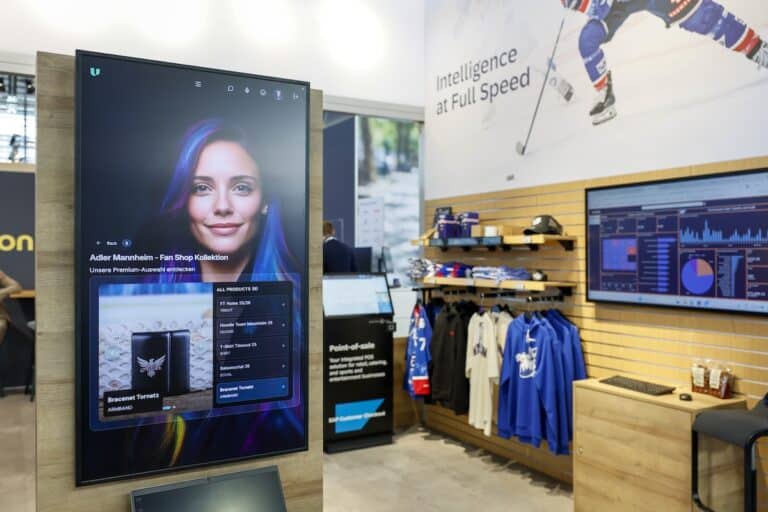
In-store retail media crossed $0.5B. AI moved from the cloud into checkout scanners. Retail space supply hit historic lows.
Verified signals on brand expansion, store openings, and mall development. Free.
Free · No credit card · Unsubscribe any time
Billed annually · View full comparison · Payment via invoice or PayPal
