L’Illa Diagonal is the most architecturally distinctive retail property in Barcelona: a 335-metre horizontal megastructure designed by Rafael Moneo and Manuel de Solà-Morales, completed in 1993 along the upper stretch of Avinguda Diagonal. The building functions as a mixed-use complex layering 33,000 sqm of retail across the lower floors, with 70,000 sqm of offices, a hotel, a public school, and an auditorium stacked above. The colloquial term “lying skyscraper” captures the design intent: Manhattan-density vertical programming reoriented horizontally into the urban grid.
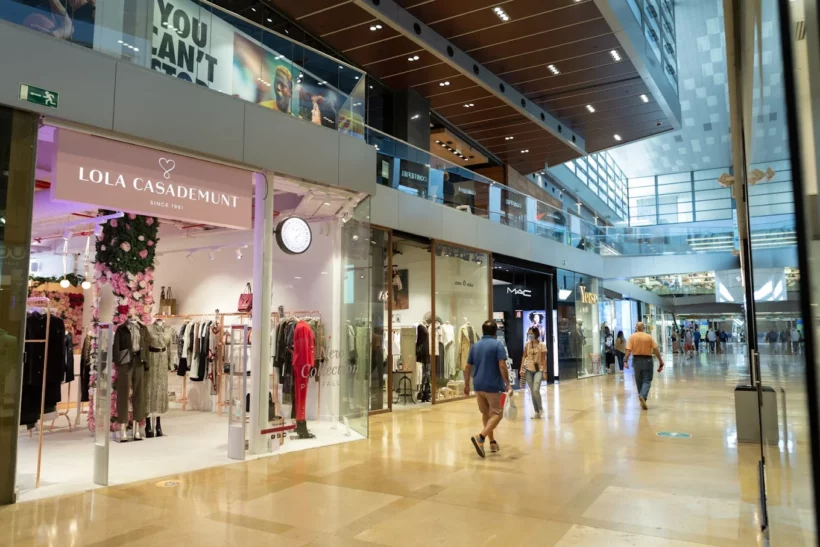
Inmobiliaria Colonial, Spain’s largest office-focused SOCIMI, owns the asset and treats the retail floor as a value-add to the office stock above. Tenant curation reflects this. FNAC, Decathlon, and Caprabo handle volume floors; Sephora, Camper, and a tight selection of European premium specialty brands serve the affluent Les Corts catchment. The mix excludes mass-market international fast-fashion entirely; there is no Primark and no H&M at L’Illa, which is unusual for a centre of this scale and one of the deliberate positioning choices that defines its commercial identity.
L’Illa’s catchment is unique within Spanish retail. The upper Diagonal corridor concentrates the highest residential income in Barcelona alongside the FC Barcelona stadium, multiple universities, and the city’s primary office cluster outside 22@. Average ticket sizes run roughly 40 percent above the Spanish urban-retail benchmark, with weekday lunchtime footfall driven by office workers and weekend activity by the residential audience.
The property serves as a working case study for European mixed-use design, regularly cited in urban planning literature alongside Tokyo’s Roppongi Hills and Paris’s Beaugrenelle.