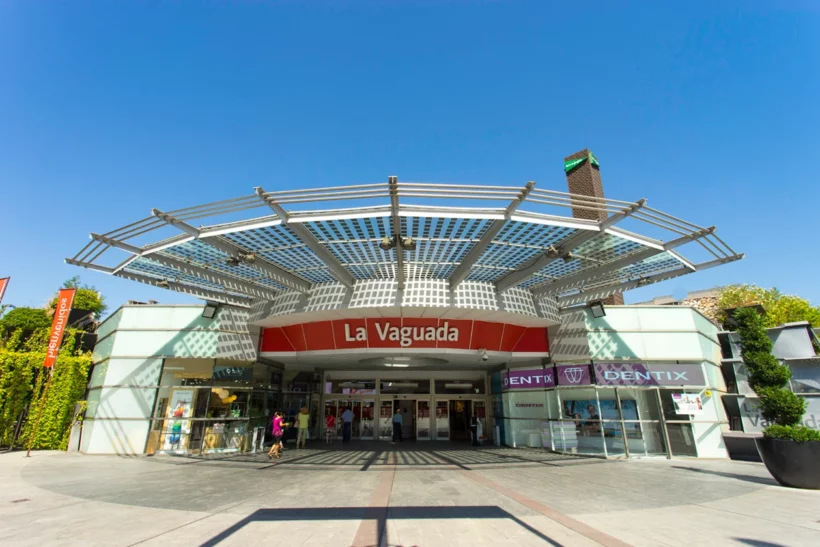
La Vaguada is the first enclosed shopping centre ever built in Madrid, opened in 1983 by then-developer El Corte Inglés in the northwestern Barrio del Pilar district. The 82,500-sqm centre passed through several ownerships before Unibail-Rodamco-Westfield acquired it as part of its Spanish portfolio consolidation. URW retained the original “La Vaguada” branding rather than rebadging to Westfield, recognising the asset’s local identity within Madrid retail history.
The catchment is structured around dense residential demographics rather than regional capture. Barrio del Pilar concentrates a mix of working-class and middle-income housing built largely in the 1970s and 1980s, with a population profile that now includes substantial second-generation immigrant communities. La Vaguada’s tenant mix reflects this dual identity: Eroski’s hypermarket and the Inditex mass-market brands handle volume; FNAC and a curated cluster of mid-tier specialty retailers anchor the discretionary floor; Cinesa’s multiplex provides the entertainment component.
Operationally, La Vaguada generates one of the highest visit-frequency rates in URW’s Iberian portfolio. The local catchment makes it function more like an urban high street than a destination centre, with average dwell times shorter than Parquesur or Tres Aguas but transaction-per-visit rates substantially higher. Madrid Metro line 9 (Barrio del Pilar) delivers direct access, and the centre’s parking infrastructure accommodates the small share of catchment arriving by car (under 40 percent on weekdays, atypical for Spanish suburban malls).
For URW, La Vaguada represents the operator’s residential-led format archetype. The asset is studied internally as a template for European urban-residential malls operating in markets with mature high-street alternatives.