
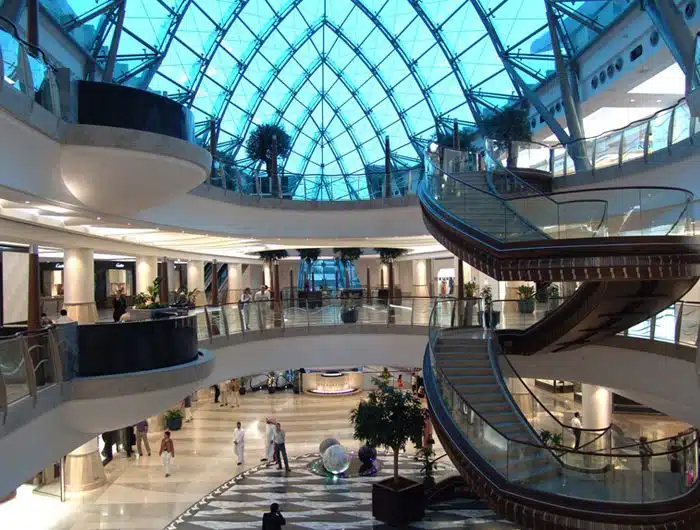
BurJuman opened in 1991 on Khalid Bin Al Walid Road in the Bur Dubai district with 42,000 sqm of gross leasable area and approximately 150 retail and service units. The property has been periodically renovated since its original opening and serves the dense Bur Dubai residential and business community as the principal enclosed retail destination in the historic commercial quarter south of Dubai Creek.
BurJuman metro station, immediately below the mall, is the interchange point between the Dubai Metro Red and Green Lines, the busiest transfer station in the UAE network by passenger throughput. Every commuter switching between the two lines passes through the BurJuman station complex. The mall did not generate this infrastructure; it inherited it from the metro network planning that placed the principal interchange in Bur Dubai, one of the most densely populated districts in Dubai. The commercial implication is a captive transit audience that encounters the mall’s retail and food court levels at the point where they are already waiting or transitioning, a footfall dynamic that no other enclosed mall in Dubai benefits from at this scale.
Bur Dubai’s residential and commercial character is defined by long-established South Asian expatriate communities, Indian, Pakistani, and Bangladeshi households concentrated in the Karama, Al Mankhool, and Al Fahidi districts, with the Indian and textile souk belt a short walk east. H&M, Zara, Mango, a supermarket anchor, a cinema multiplex, and a comprehensive food court serve this demographic at price points and product ranges calibrated for middle-income resident shopping rather than luxury or tourist-destination purchasing. A rooftop restaurant terrace adds a dining occasion that the mall’s otherwise urban format does not naturally generate.
BurJuman’s commercial position is metro-transit retail in the most transit-dense district of Dubai. It is not the largest, the most luxurious, or the most programmed mall in the city, but it occupies the specific transit-captive commercial position at the Red-Green Line interchange that gives it a structural footfall advantage that cannot be replicated by any mall built elsewhere in the network. As the Dubai Metro expands with new lines and stations, the Red-Green interchange at BurJuman remains the busiest platform on the existing network, a position the property will continue to benefit from regardless of what opens next in Dubai.
Verified signals on brand expansion, store openings, and mall development. Free.
Free · No credit card · Unsubscribe any time
Billed annually · View full comparison · Payment via invoice or PayPal

