
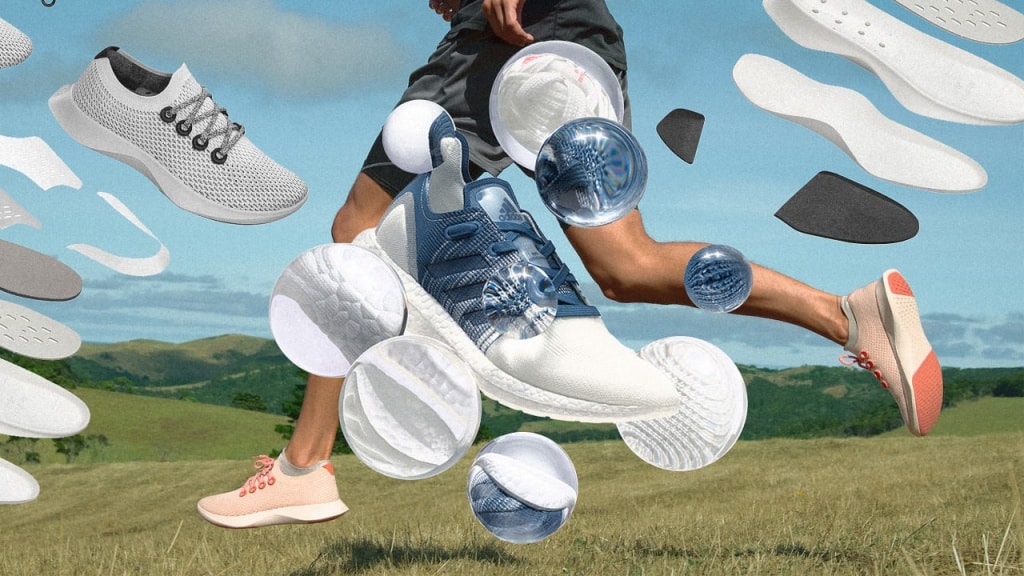
Adidas and AllBird have announced a partnership aimed at creating new environmentally friendly technologies.
It was stated that much attention would be paid not only to innovations in production processes but also to fundamental changes in supply chains and the creation of new renewable materials. The companies are confident that they will be able to create the most environmentally friendly sports shoes in history.
According to the companies, they want to become “catalysts and creators of significant improvements” and not just talk about ecology and environmental issues. The impulse for the partnership was the brands’ previous achievements in these areas. “This is a problem that cannot be solved by one company,” says Tim Brown, co-owner of Allbirds.
The companies will work together to select new materials, review production technologies, and optimize transportation methods. The latter involves reducing fuel consumption as much as possible and using renewable energy. Today, about 13.6 kg of carbon dioxide is emitted in the production of one sneaker (which also includes the production of materials, production of shoes, and their delivery to the end consumer).
This new partnership is designed specifically to reduce this impressive figure to the minimum. Its goal will be to create a sneaker that can be considered environmentally friendly, and that will not have a negative impact on the environment. Company representatives hope that other brands will follow suit.
Gross margins and selected profit metrics for Coach, Pop Mart, lululemon, Miniso, Five Below, TJX and Costco, plus where each…
NikeSKIMS, Birkenstock and Starbucks Reserve chose HKRI Taikoo Hui for major China debuts. Why the Shanghai complex keeps winning new…
Bluewater opens its first new anchor since 1999. Next takes the former House of Fraser space with about 132,000 square…

Opening in IMAX 70mm on July 17, 2026: Christopher Nolan's The Odyssey. Select shows went on sale one year in…

European retail is scaling AI, agentic commerce and retail media, but consumer trust is becoming the constraint. Four structural shifts…
Mall operators are no longer leasing space for pop-ups. They are selling audience access.
