

57 verified brand expansion signals. 25+ markets. Seven archetypes. One structural pattern.
57 verified brand expansion signals. 25+ markets. Seven archetypes. One structural pattern.
For most of the last decade, the default question about physical retail was whether it would survive. Then the question became whether it would recover. In 2025, neither frame was accurate.
Physical retail expanded. But not evenly, not broadly, and not in the formats that defined the previous era.
What happened instead was concentration. Capital flowed into a narrow set of corridors: value retail at extreme volume, DTC brands crossing into permanent physical presence, and a handful of international geographies absorbing first-entry demand from global brands. The middle thinned. Legacy formats contracted. And the brands expanding fastest shared a common trait: their stores functioned as infrastructure, not decoration.
This article is based on the first data release from Malls.com Research: Brand Expansion Signals 2026, a dataset tracking 57 verified brand expansion signals globally across 2025. Every signal in the dataset reflects committed capital, not intentions: operational launches, signed leases, confirmed store openings, or format changes documented through trade-grade sourcing.
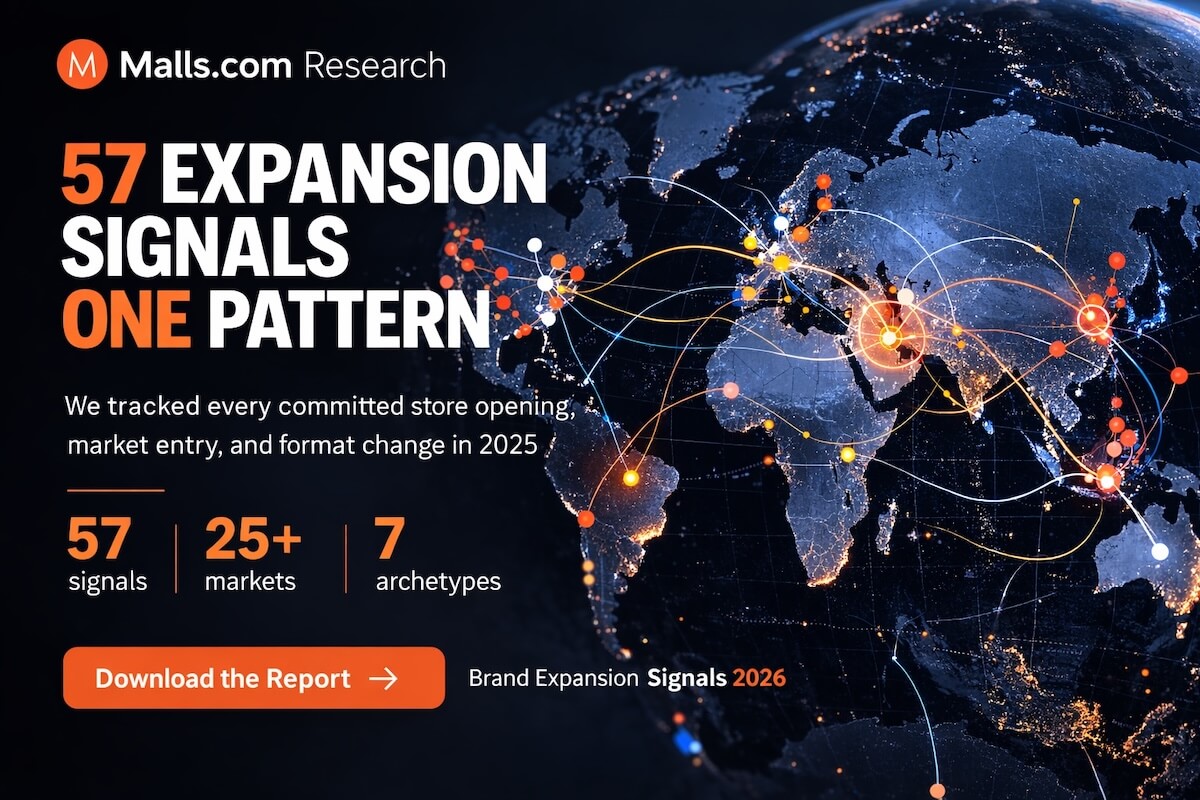
Brand Expansion Signals 2026 57 verified brand expansion moves · 25+ markets · 7 expansion archetypes · geographic corridor analysis · vendor activation mapping
The findings complement what we covered on the ground at EuroShop 2026, where the store-as-infrastructure thesis became visible in hardware. The data now confirms it in capital flows.
When we mapped the 57 signals, a clear structure emerged. Seven expansion archetypes, but three corridors accounted for the overwhelming majority of committed capital and operational activity.
Dollar General planned more than 800 new stores in 2025. Dollar Tree planned 600+. Aldi planned 225+. Five Below planned 200+. Together, these four chains accounted for more than 1,800 new locations in a single year, the most concentrated volume expansion in any segment Malls.com Research tracked.
All four share a profile: domestic footprint, standardized format, compressed construction timelines, and supply chains with minimal import exposure. In a year when tariff volatility made expansion planning difficult for import-dependent retailers, these chains moved forward without hesitation.
The expansion is not a reaction to a recession. It reflects a multi-year structural shift in where consumers shop and how retail real estate gets absorbed. John Mercer, head of global research at Coresight Research, described the pattern earlier this year: the drift from mid-tier to discount is not a short-term reaction to inflation but a multi-year growth trend in both consumer behavior and physical real estate demand.
For commercial real estate, the math is straightforward. The vacancy left by Bed Bath & Beyond, Joann, Rite Aid, and other closures from the 2023-2025 wave is being absorbed by Aldi, Five Below, Burlington, and Dollar General. Strip centers that repositioned toward value and convenience are running at high occupancy. The ones that held out for traditional tenants are still waiting.
In many US strip centers, the replacement tenant for a closed mid-tier chain now looks predictable: Aldi, Burlington, Five Below, or Dollar General. The leasing conversation has shifted from “who can we attract” to “which value format gets here first.”
At least 12 digitally-native brands crossed from online-only to permanent physical retail in 2025. Bombas opened its first NYC store. OOFOS moved from pop-ups to permanent locations across multiple US cities. Monos announced a five-store US rollout. VIVAIA and Knix each debuted flagship stores in SoHo. Eastside Golf opened its first brick-and-mortar location.
We covered this transition earlier in our analysis of 10 verified retail moves by DTC brands going offline. The Brand Expansion Signals dataset now confirms that DTC-to-physical is no longer an exception or an experiment. It is a standard phase of brand maturation.
The economics behind the shift are converging. Online customer acquisition costs continue to rise across every major advertising platform. Physical stores provide brand-building exposure that digital channels cannot replicate. And the shop-in-shop model, where brands like Warby Parker partner with Target or Parachute partners with Target’s home category, offers a path to physical scale with minimal CAPEX risk.
The partner-led model deserves particular attention. For DTC brands, it provides immediate physical reach through an existing retail footprint. For the host retailer, it refreshes assortment and drives foot traffic in categories where owned brands may be underperforming. For vendors, it creates a distinct integration challenge: shared POS, synchronized inventory, and linked loyalty programs rather than a standard store buildout.
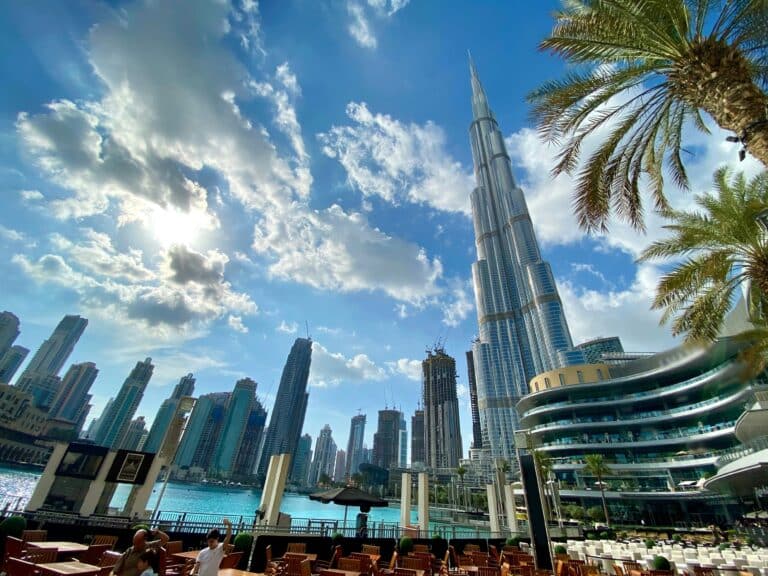
Dubai, Cairo, and the wider Middle East appeared as target markets for SKIMS, Adidas Originals, Tim Hortons, Wingstop, and Rituals, among others. MENA was the single most active region for first-country brand entries outside the United States in 2025.
We published a detailed analysis of this pattern when five American brands opened first international stores in Dubai within 90 days. The dataset confirms that this was not a coincidence. MENA retail infrastructure has matured to the point where it reliably absorbs international brand demand at a pace comparable to Paris or London, with a franchise and operator ecosystem, including Alshaya, Majid Al Futtaim, and Al Tayer, that reduces operational complexity for entering brands.
The geographic pattern across all 57 signals reveals five distinct clusters: the United States as the dominant destination (22+ signals), Paris as the luxury and contemporary hub (5 signals), UAE/MENA as the fastest-growing international corridor (5+ signals), East Asia for prestige flagships (4 signals), and Latin America as an emerging market (3 signals, including H&M’s first-ever Brazil store and Ulta Beauty entering Mexico).
These clusters are not random. Each reflects a distinct demand profile. The US attracts volume rollouts and DTC debuts. Paris attracts high-CAPEX flagships. MENA attracts franchise-led international entries. Understanding which corridor a brand targets reveals its expansion archetype and, by extension, the vendor and infrastructure demand it will create.
The dataset is as notable for what it excludes as for what it contains.
Mid-tier department stores, undifferentiated specialty retail, and import-heavy apparel chains are largely absent from the expansion signals. The brands closing stores in volume in 2025 and early 2026, including GameStop (470 locations), Eddie Bauer (Chapter 11 filing, winding down its US/Canada store network), Saks OFF 5TH (57 of 69 locations), and Bahama Breeze (all 28 locations), share a profile: middle positioning, no operational edge, no cultural gravity, and no infrastructure function.
The bifurcation is not new. We have tracked it across multiple Malls Money issues and in our coverage of the most anticipated retail projects of 2026. What the dataset adds is quantification. The brands that expanded in 2025 either operated at massive scale in value retail, executed precise first-entry moves in high-conviction markets, or invested in high-CAPEX flagship formats (Louis Vuitton, Prada, Loewe, Moncler) that function as cultural infrastructure rather than traditional stores.
Everything in between contracted or stayed still.
The expansion pattern in the data intersects with another structural shift: the rise of retail media as a margin engine.
Walmart Connect, Walmart’s US advertising arm, grew 41% year over year in Q4, bringing global advertising revenue to $6.4 billion for fiscal 2026. Advertising and membership fees together accounted for one-third of Walmart’s quarterly operating income. This is not a side business. It is the margin engine that funds Walmart’s aggressive pricing and expansion.
Target’s Q4 told a related but different story. Comparable store sales fell 3.9%. Transactions declined 2.9%. But Roundel, Target’s retail media network, posted double-digit growth. Non-merchandise revenue rose more than 25%. New CEO Michael Fiddelke responded with a $2 billion reinvestment plan: 30+ new stores, 130 remodels, and hundreds of millions in store labor.
A store with two revenue streams, product and media, behaves differently than a store with one. We explored the in-store media economics in detail in our EuroShop 2026 field report, where companies like Verve are installing digital screens inside EDEKA supermarkets at their own cost and monetizing shopper attention through programmatic advertising. The retailer pays nothing upfront. The model generates 40-60% EBITDA margins on attention alongside 2-3% net margin on product from the same square meter.
For mall operators and landlords, this creates a new variable in tenant evaluation. The retailers most likely to expand, and most likely to pay premium rents, are those with a media revenue layer that subsidizes occupancy costs. The retailers most likely to contract are those operating on product margin alone in categories where e-commerce offers comparable selection at lower overhead.
Ross Stores reported Q4 same-store sales growth of 9.0% in a quarter where the company had forecast 4.0%. The beat was more than double expectations. In the same quarter, Target’s comparable sales fell 3.9% and Best Buy’s fell 0.8%.

Same industry. Completely different capital logic.
Off-price and discount are not countercyclical plays that perform well during downturns and fade during recoveries. The data shows a persistent, structural reallocation of consumer spending and retail real estate toward value formats. Ross, Burlington, and TJX all delivered strong Q4 results. Dollar General and Five Below are expanding at a pace that dwarfs any other segment.
For the commercial real estate community, this means the tenant mix equation has shifted permanently. The brands leasing space in 2026 are not the brands that leased space in 2019. Site selection, tenant outreach, and property positioning need to account for this new reality.
Physical retail expansion did not accelerate in 2025. It concentrated into five geographies, three capital logics, and formats with margin structures that justify the buildout.
The Brand Expansion Signals 2026 report maps every verified signal, including archetype classification, geographic distribution, and a vendor activation analysis showing which expansion patterns trigger demand in construction, retail technology, supply chain, franchise infrastructure, and store design.
The dataset is free. It is the first release from Malls.com Research, and it reflects the same methodology and editorial standards that guide everything we publish on malls.com and in Malls Money, our weekly retail intelligence newsletter.
The question for 2026 is no longer whether physical retail will expand.
It will.
The real question is who reads the map and who continues building stores in the wrong corridors.
Mati Brooks is the editor and publisher of Malls.com, a global retail intelligence platform tracking mall developments, store openings, and brand expansion across 50+ countries.
Subscribe to Malls Money for weekly signals → signals.malls.com
Download the full report → Brand Expansion Signals 2026
Starbucks presents a new addition to its fall menu - a third pumpkin drink option.
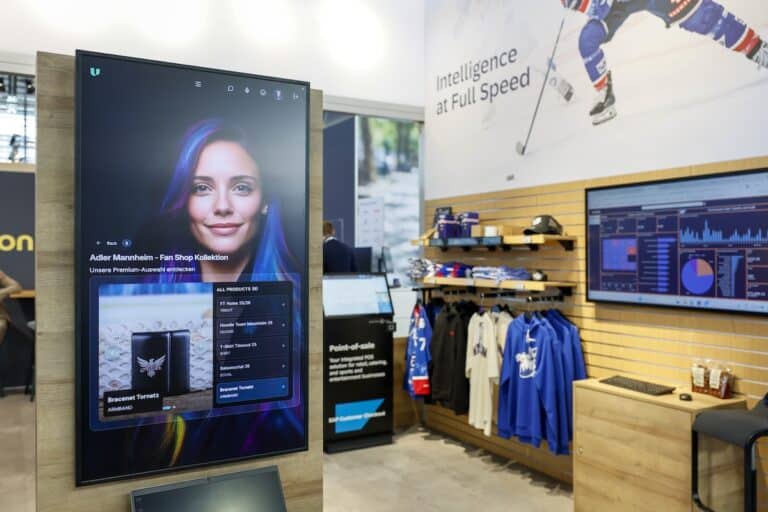
In-store retail media crossed $0.5B. AI moved from the cloud into checkout scanners. Retail space supply hit historic lows.
3-4 November 2026, Cannes MAPIC takes place every autumn in Cannes and remains one of the few global events where…

Las Vegas · May 2026 · Las Vegas Convention Center ICSC Las Vegas takes place each year in May and…

World Retail Congress takes place each spring in London and brings together senior retail executives, investors, and property leaders for…
Skims, Primark, Ulta Beauty, and Pacsun all opened their first international stores in Dubai within 90 days.
