
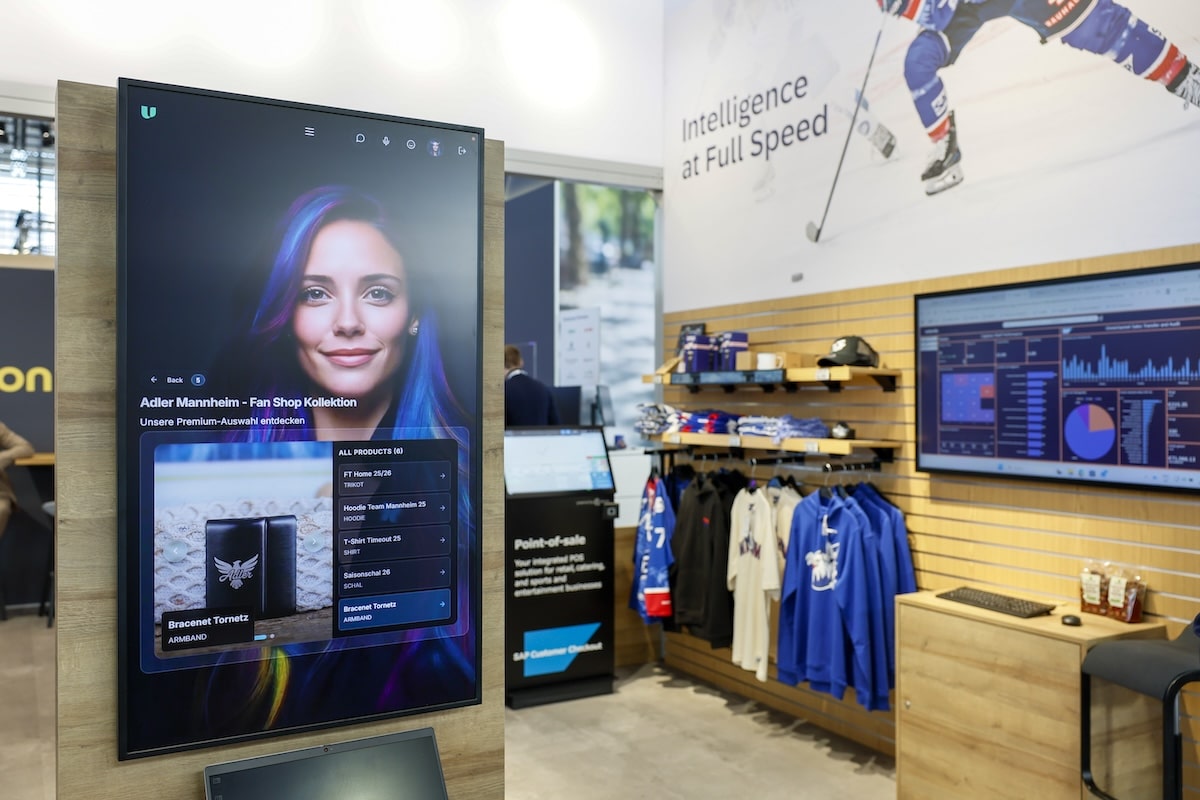
In-store retail media crossed $0.5B. AI moved from the cloud into checkout scanners. Retail space supply hit historic lows.
For years, the conversation about physical retail revolved around experience. Make the store beautiful. Make it immersive. Make it worth the trip.
That era is not over, but a different one has begun.
The physical store is becoming infrastructure. Not a destination that happens to sell things, but a monetized platform that generates revenue from attention, data, and compute alongside product sales. The shift changes who invests in stores, how those investments are measured, and what a square meter of retail space is actually worth.
Three forces are converging to drive this transition. Any one of them would reshape store economics on its own. The fact that all three are happening at once is what makes this moment different from anything physical retail has faced since the rise of e-commerce.
Some terms first, because they get used loosely.
In-store retail media is advertising delivered inside a physical store through digital screens, electronic shelf labels, smart carts, audio systems, and other connected surfaces. It allows brands to reach shoppers at the point of purchase using the retailer’s first-party data. Unlike traditional trade marketing (endcaps, printed signage, slotting fees), in-store retail media is programmatic, measurable, and sold on CPM or cost-per-engagement models similar to digital advertising.
A retail media network (RMN) is the platform a retailer builds to sell this advertising. It packages audience data, ad inventory (on-site, off-site, and in-store), and measurement into a single offering for brand advertisers. Amazon Ads, Walmart Connect, and Kroger Precision Marketing are the largest US examples. In Europe, Ahold Delhaize, Tesco, and Carrefour are building comparable networks.
Edge AI in retail refers to artificial intelligence that runs locally on hardware inside the store rather than in the cloud. This includes AI embedded in checkout scanners, shelf cameras, lighting systems, and dedicated edge computing PCs. Edge processing eliminates cloud latency and enables real-time decisions for loss prevention, pricing, inventory detection, and media triggering.
These three things used to live in separate budget lines and separate conference tracks. Not anymore. In-store retail media needs edge infrastructure to operate in real time. Edge AI needs media revenue to justify the investment. Both are intensified by the scarcity of physical retail space that makes every square meter more expensive and forces higher yield per location.
The global retail media market is projected to grow from $184 billion in 2025 to over $300 billion by 2030. Most of that spend still flows to online channels. The fastest-growing segment is inside the store.
In-store media spending on digital screens and signage was projected to surpass $0.5 billion in 2025, according to industry estimates, growing roughly 47% year over year. The channel remains less than 1% of total US retail media spend, which means the runway is mostly ahead. Analysts project in-store media will cross $1 billion by 2028.

The economics are direct. A grocery retailer operating on 2-3% net margins on goods sold can generate 40-60% EBITDA margins on in-store media. Same square meter. Same shopper traffic. Different P&L.
Amazon proved the model digitally, building an advertising business now generating over $50 billion annually. Walmart Connect reached roughly $4.4 billion in 2025, up 27% year over year. Now the model is moving physical.
Verve, a German-rooted ad-tech company with over €550 million in revenue and more than 1,000 employees, acquired DooH operator Viewento and is now installing digital screens inside EDEKA supermarkets across Germany. The model: Verve covers the entire infrastructure cost, then monetizes shopper attention through programmatic advertising. The retailer pays nothing upfront.
In the US, the pattern is accelerating. Kroger announced an aggressive in-store screen rollout for 2026. Albertsons launched an in-store measurement system designed to prove incremental sales lift. Ahold Delhaize is rolling out Edge, a proprietary ad platform reaching 26 million weekly shoppers.
Hardware keeps pace with ambition. Hanshow demonstrated a Smart Cart that links shopper position to shelf data in real time: the cart knows where the customer is, what products surround them, and triggers promotions on electronic labels the moment a shopper passes. Retail media activation at centimeter precision.
SOLUM, a Samsung spin-off, presented a unified platform connecting shelf labels, digital screens, and analytics into a single data layer. One system powers pricing, promotion, and measurement simultaneously.
For mall operators and landlords, the implications extend beyond individual tenants. If tenants build in-store media networks, the landlord who controls common-area screens, foot traffic data, and venue-level audience measurement has a revenue layer that did not exist three years ago. The question is no longer whether malls should participate in retail media. It is whether they can afford not to.
Retail media gets the headlines. But the infrastructure underneath it is where the real shift is happening. Artificial intelligence is embedding itself directly into store hardware, and this changes what a store can do operationally.
For years, AI in retail meant cloud-based analytics and demand forecasting on remote servers. That model works for planning. It fails for execution. Cloud latency is too slow for loss prevention at self-checkout. Too unreliable for real-time pricing. Too risky for business-critical decisions during peak hours.
Edge computing is the solution. In 2026, it stopped being theoretical.
Malls.com team, reporting from the floor of EuroShop 2026 in Düsseldorf: entire halls dedicated to AI-driven analytics, automated checkout, intelligent shelving, and robotics. What stood out was not the presence of innovation, but its maturity.

Datalogic presented Magellan scanners with embedded AI and computer vision built directly into the device. No external cameras. No cloud. No servers. The scanner detects label switching, unstacked items, and produce misidentification in real time. Decisions happen inside the device in milliseconds.
Pyramid Computer integrated cameras directly into store lighting rails. Invisible to shoppers. Data processed locally. One application already in production: AI-based age verification at self-checkout, no ID required.
Hanshow’s NexShelf turns every shelf into a connected digital asset. AI cameras and electronic labels detect out-of-stocks, verify planogram compliance, and track product position at centimeter resolution. Combined with Smart Cart data, the system creates a Store Digital Twin: a real-time digital mirror of the entire store.
Lenovo flew its global desktop leadership to Düsseldorf for the world premiere of ThinkEdge second generation: ruggedized edge AI PCs purpose-built for retail. The message from one of the world’s largest hardware manufacturers was unambiguous. In-store computing is foundational, not optional.
Three years ago, these technologies lived in pilot programs. Today, they are in mass production. The store is becoming a distributed edge network where checkout functions as a compute node, lighting operates as a sensor grid, and shelves serve as data surfaces.
Edge AI reduces connectivity dependency, improves transaction speed, strengthens loss prevention, and creates the data infrastructure necessary for in-store retail media. These are not separate initiatives. They are layers of the same platform.
On the show floor in Düsseldorf, the shift was visible not in keynote demos but in procurement conversations. Exhibitors were discussing deployment timelines and unit economics, not prototypes.
Everything described above requires physical space. And physical space is exactly what the market is running out of.
JLL’s Q4 2025 US Retail Market Dynamics report describes a market defined by resilience, scarcity, and strategic competition for space. Vacancies remain near historic lows. New retail construction starts in Q4 2025 fell 44% year over year. Annual starts are at their lowest in 15 years.
Nearly 70% of leases signed in Q4 were for spaces under 2,500 square feet. Landlords in well-located centers are achieving significant rent premiums on re-leasing. Tenants renewing five-year-old leases face substantially higher rates.
In Europe, the pattern carries additional structural weight. German retail investment dropped from €9.1 billion in 2023 to €7.0 billion in 2025. Germany has lost approximately 100,000 stores in 15 years. New construction starts across European commercial real estate are at their lowest since 2010.
Within this contraction, a bifurcation is visible. Food retail in Germany is investing more per square meter than ever: €961/sqm for small formats, up 13%. Capital flows away from large, undifferentiated surfaces and toward compact, technology-dense formats. The retailers expanding are those who extract maximum value per square meter through product sales, media revenue, and operational intelligence combined.
The broader capital competition is visible in JLL’s Global Real Estate Outlook. New US office construction down 75% in 2026. Industrial deliveries well below peak. Data center capacity surging 19%. Retail no longer competes primarily with other retailers for space. It competes with data centers, logistics hubs, and housing for land, capital, and construction capacity.
Retailers expanding aggressively face a market where quality space is limited, rents are rising, and the window to secure favorable positions is narrowing. The brands that locked in leases when Bed Bath & Beyond and Joann freed up space secured positions that may not reappear at comparable economics.
Investors rarely talk about screens and scanners. They talk about margin mix and capital efficiency. But the screens and scanners are what changed the math.
Retail media revenue is appearing as a separate line item on earnings calls. Walmart does not break out Walmart Connect’s margins individually, but analysts estimate the advertising business contributes disproportionately to operating income growth. When a retailer’s ad business grows 27% while same-store sales grow in the low single digits, investors recalculate what the store network is worth.
M&A activity reflects the same logic. Verve’s acquisition of Viewento was not a media company buying another media company. It was an ad-tech platform buying physical distribution for its inventory. The acquired asset was not software. It was screens inside stores with guaranteed foot traffic. Expect more transactions where digital advertising companies acquire physical retail infrastructure, or where retail operators acquire media capabilities.
For REITs and commercial real estate investors, the valuation framework is shifting. A retail property’s worth is no longer purely a function of rent per square foot and occupancy rate. It increasingly depends on whether the property and its tenants can monetize the media and data layers that technology enables. Two properties with identical occupancy and identical rent per square foot may have fundamentally different values if one generates significant media and data revenue and the other does not.
JLL’s data supports the reallocation. US retail investment volumes in 2025 exceeded long-term averages, with institutional capital surging back into the sector. In Canada, retail investment climbed 10% year over year to $6.6 billion. Capital is not returning to retail because rents are rising. It is returning because the asset class is being redefined.
The question for investors is no longer “is physical retail viable?” It is: which properties are positioned to capture the infrastructure premium, and which remain pure-play tenant boxes?
The convergence of media, compute, and scarcity can be mapped as a three-layer stack. Each layer depends on the one below it and enables the one above.

Layer 1: Physical space. The constrained, appreciating asset. Retail supply is at historic lows. Competition from data centers, logistics, and housing for land and capital. This layer sets the cost floor. Every subsequent layer must increase revenue per square meter above this rising baseline.
Layer 2: Edge compute. The operational backbone. AI is embedded in scanners, cameras, lighting, shelves, and dedicated edge PCs. Processes data locally in real time. Enables loss prevention, inventory accuracy, pricing optimization, and audience measurement. Without this layer, in-store media cannot operate at the speed and precision advertisers require.
Layer 3: Media and data monetization. The margin engine. In-store retail media networks, programmatic advertising on screens and shelf labels, audience data sold to brands. Generates 40-60% EBITDA margins versus 2-3% on goods. This layer transforms the store from a cost center for selling product into a revenue platform.
The stack has a reinforcing dynamic. Scarcity (Layer 1) forces a higher yield per location. Edge compute (Layer 2) enables the data and speed required for media. Media revenue (Layer 3) justifies the investment in compute and the rising cost of space.
Retailers operating only on Layer 1 are tenant businesses with compressed economics and rising costs. Retailers operating across all three layers are infrastructure businesses. The gap between these two models widens with every rent increase.
For mall operators, the framework suggests a specific strategic question: at which layer does the landlord participate? Providing physical space (Layer 1) is table stakes. Providing edge infrastructure and data services (Layer 2) creates differentiation. Operating a property-level media network (Layer 3) creates a new revenue stream entirely.
The race for the first full-scale European in-store RMN is underway. Verve/EDEKA and Ahold Delhaize Edge are the front-runners. Whichever proves the model at scale sets the template for the continent. Embedded AI in scanning hardware is moving from an optional upgrade to standard procurement. Datalogic is already in mass production. When competitors match, it becomes the baseline.
US strip mall vacancy data through Q3 2026 will show whether rising rents and zero new construction are creating genuine supply crises or whether retailer selectivity offsets demand pressure.
The first mall operator to launch retail media as a service across its entire property, selling audience access and data rather than leaving monetization to individual tenants, will signal a new chapter in commercial real estate. And the first REIT to report media-related revenue as a distinct segment will confirm the market has repriced what a retail property is.
None of this is speculative. The technology is in production. The economics are on earnings calls. The space constraints are in JLL quarterly data. Physical retail spent a decade defending its relevance against e-commerce. That argument is over. Consumers spend the majority of their money in stores.
The argument now is about what happens inside those stores. Whether they remain tenant boxes with thin margins and rising costs. Or whether they become something else: infrastructure platforms that generate revenue from attention, data, and compute alongside the goods on the shelves.
Retail is no longer a tenant business. It is an infrastructure business with compute attached.
Malls.com tracks retail expansion, store technology, and commercial real estate developments across global markets. Subscribe to Malls Money, our weekly intelligence newsletter covering the signals that shape physical retail.
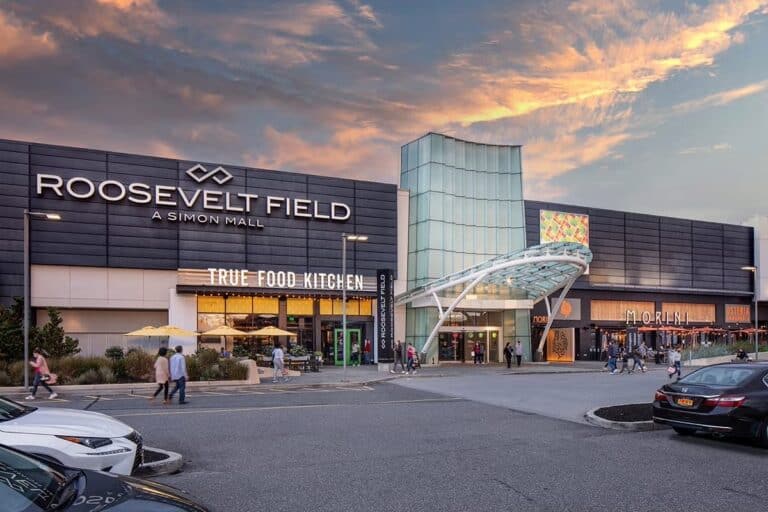
900 malls remain in the United States. The top 100 account for half the sector's value.

57 verified brand expansion signals. 25+ markets. Seven archetypes. One structural pattern.

3-4 November 2026, Cannes MAPIC takes place every autumn in Cannes and remains one of the few global events where…

Las Vegas · May 2026 · Las Vegas Convention Center ICSC Las Vegas takes place each year in May and…

World Retail Congress takes place each spring in London and brings together senior retail executives, investors, and property leaders for…

Skims, Primark, Ulta Beauty, and Pacsun all opened their first international stores in Dubai within 90 days.
Verified signals on brand expansion, store openings, and mall development. Free.
Free · No credit card · Unsubscribe any time
Billed annually · View full comparison · Payment via invoice or PayPal
