

Singles’ Day 2025 breaks new global records with $150B+ in sales. Discover the top categories, data insights, and retail trends shaping the world’s biggest shopping event—from Tmall to Amazon and Shopee.
Singles’ Day 2025 breaks new global records with $150B+ in sales. Discover the top categories, data insights, and retail trends shaping the world’s biggest shopping event—from Tmall to Amazon and Shopee.
What started as a university prank in Nanjing back in 1993 has grown into the largest retail event on the planet.
In 2025, Singles’ Day—also known as 11.11 Global Shopping Festival—is once again setting records across China, Southeast Asia, the Middle East, and Europe, with combined sales expected to surpass $150 billion, according to Alibaba Group and Bain & Company.
“Singles’ Day is not just a Chinese shopping day anymore—it’s a global consumer moment,”
says Craig Johnson, president of Customer Growth Partners (U.S.).
“The behavioral ripple effect now extends across Amazon, Lazada, Shopee, and even physical malls worldwide.”
Alibaba’s Tmall and JD.com alone reported over 900 million active shoppers, while platforms such as Amazon Global Store, Shopee, and Noon.com extended the event into a week-long shopping festival.
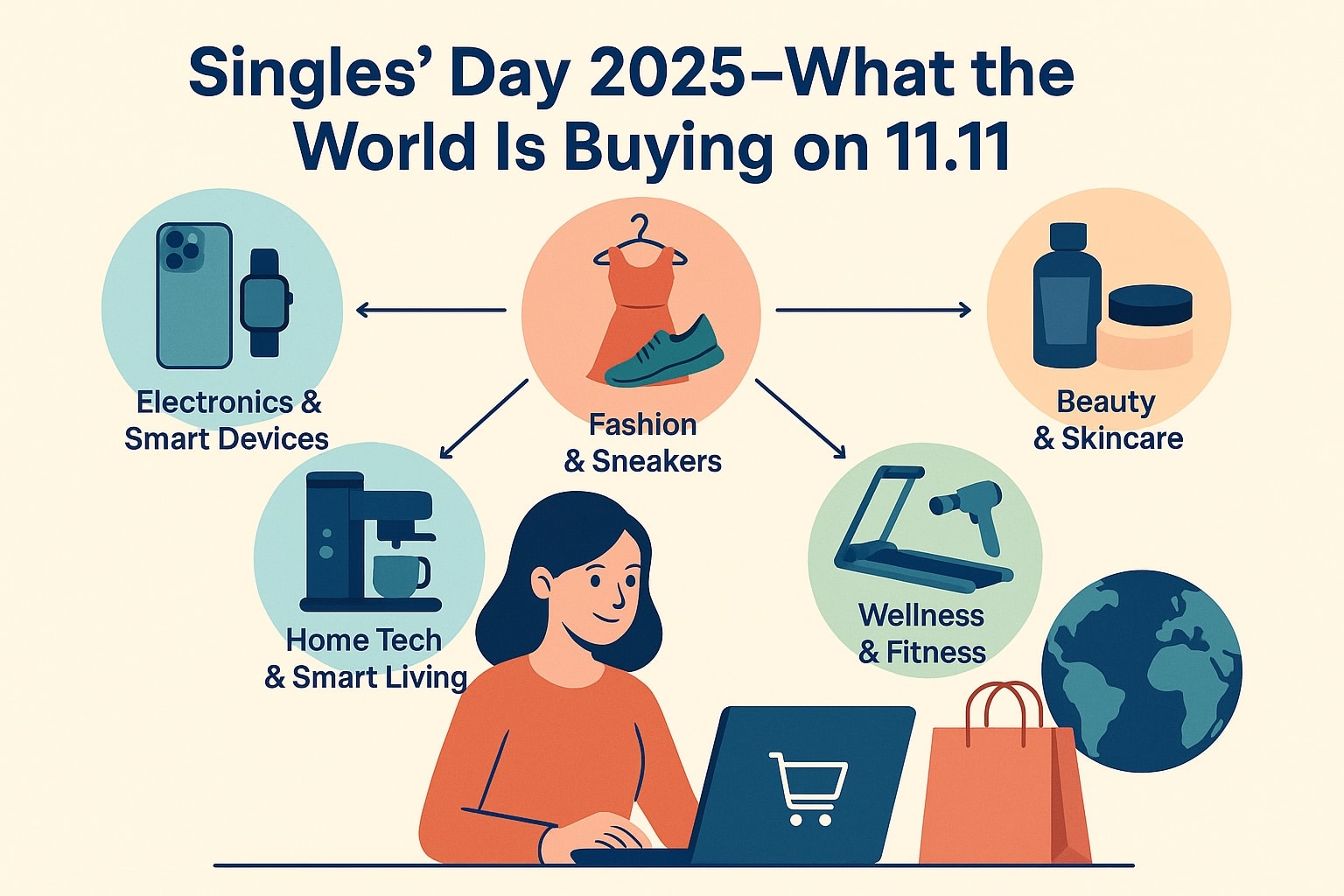
According to Counterpoint Research, electronics still hold the largest share of Singles’ Day revenue—around 35% of total GMV.
Top-selling items this year include:
Tmall data shows that 500+ brands reached ¥100 million ($14M) in GMV within the first six hours of sales.
“Consumers see connected devices not only as tech—but as lifestyle extensions,”
says Zhang Yiming, head of digital commerce at China Resources MixC.
“The emotional link between AI, home life, and status drives repeat purchases.”
This year’s 11.11 fashion wave blends accessibility with aspiration.
Brands like Zara, Uniqlo, and H&M lead the volume game, while Nike, Adidas, and New Balance drive hype with limited drops and celebrity collaborations.
Offline retail joined the trend: according to CBRE, malls in Shanghai, Dubai, and Bangkok reported 25–30% increases in foot traffic during Singles’ Day weekend.
Trend insight: The shift from logo mania to timeless quality—“Quiet Luxury”—continues to define post-pandemic fashion preferences.
Beauty remains one of the fastest-growing categories, up +22% year-over-year, driven by livestream commerce and TikTok Shop integration.
Top-selling products included:
“Consumers want authenticity and visual proof,”
says Emily Zhang, beauty industry analyst at Euromonitor International.
“Live demos hosted by creators inside malls deliver trust faster than any ad.”
In China, over 180,000 livestream sessions were hosted across Taobao Live and Douyin during the 11.11 campaign, with beauty contributing nearly 20% of total livestream GMV.
Post-pandemic lifestyles continue to prioritize comfort, efficiency, and sustainability.
AliExpress reports a +40% YoY growth in its Home Upgrade category, led by robot vacuums, smart coffee machines, and air purifiers.
Eco-smart home devices—like Tineco Floor One S7 Pro and Xiaomi Smart Humidifier 2 Pro—ranked among the top search queries worldwide.
Key driver: livestream product demos, which provide “proof of value” before purchase.
Secondary driver: sustainability—green-energy devices and reusable kitchenware saw a 2× increase in search demand.
Singles’ Day 2025 marks a clear psychological shift.
Consumers are investing in self-care and wellbeing tech rather than indulgent “treat yourself” splurges.
Top trending items include:
According to McKinsey’s 2025 Health & Beauty report, 62% of Gen Z shoppers say they now view wellness tech as “essential,” not luxury.
Across all regions, 11.11 is redefining retail ecosystems.
Global GMV topped $150 billion, with Asia accounting for 78%, followed by Europe (12%) and the Middle East (6%).
Emerging markets such as Vietnam, Saudi Arabia, and Brazil showed record growth rates (+35% YoY), as local marketplaces like Tiki.vn and Noon.com adopted Singles’ Day branding.
Malls worldwide—from MixC Shenzhen Bay to Mall of the Emirates—launched “11.11 Experience Zones”, blending digital campaigns with live fashion shows, product demos, and influencer-driven popups.
Singles’ Day isn’t just an online flash sale anymore—it’s a global retail experiment in consumer psychology.
Three key takeaways for the industry:
“11.11 shows how retail is becoming more emotional, experiential, and localized,”
notes Doug Stephens, retail futurist and author of Resurrecting Retail.
“It’s not about discounts anymore—it’s about belonging.”
To feature your brand’s 11.11 activation, flagship store, or in-mall campaign, contact the Malls.com editorial team and be part of the Global 11.11 Retail Map 2025—a curated showcase of worldwide shopping experiences.
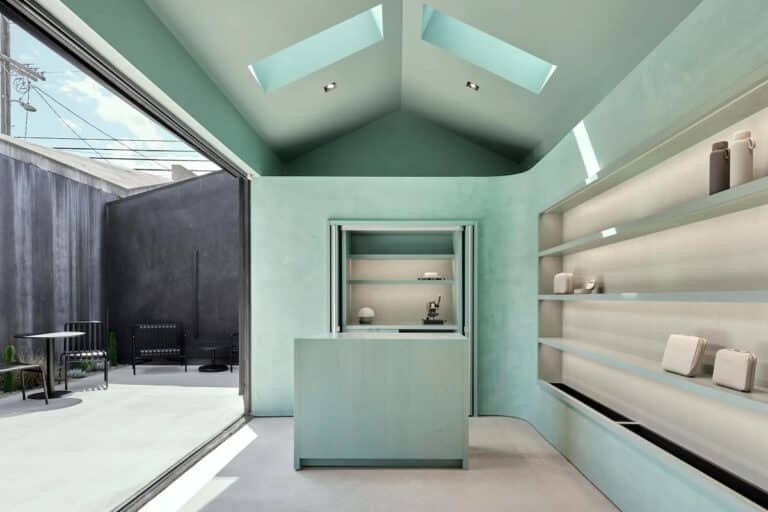
57 verified brand expansion signals. 25+ markets. Seven archetypes. One structural pattern.
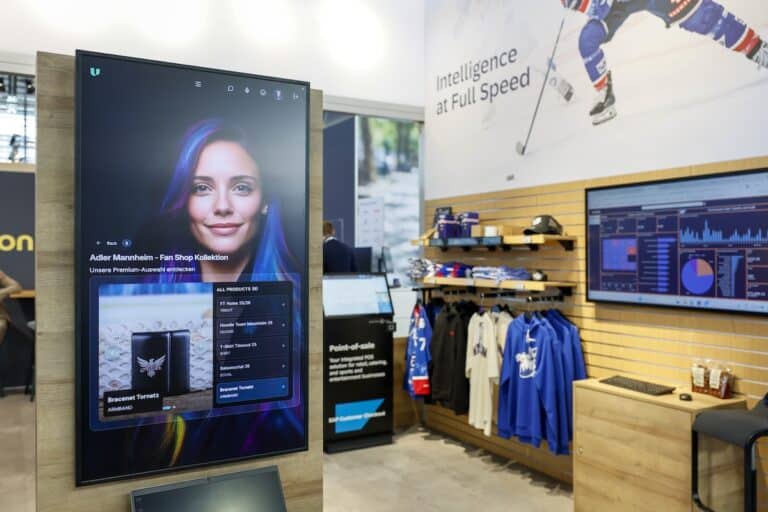
In-store retail media crossed $0.5B. AI moved from the cloud into checkout scanners. Retail space supply hit historic lows.
3-4 November 2026, Cannes MAPIC takes place every autumn in Cannes and remains one of the few global events where…

Las Vegas · May 2026 · Las Vegas Convention Center ICSC Las Vegas takes place each year in May and…

World Retail Congress takes place each spring in London and brings together senior retail executives, investors, and property leaders for…
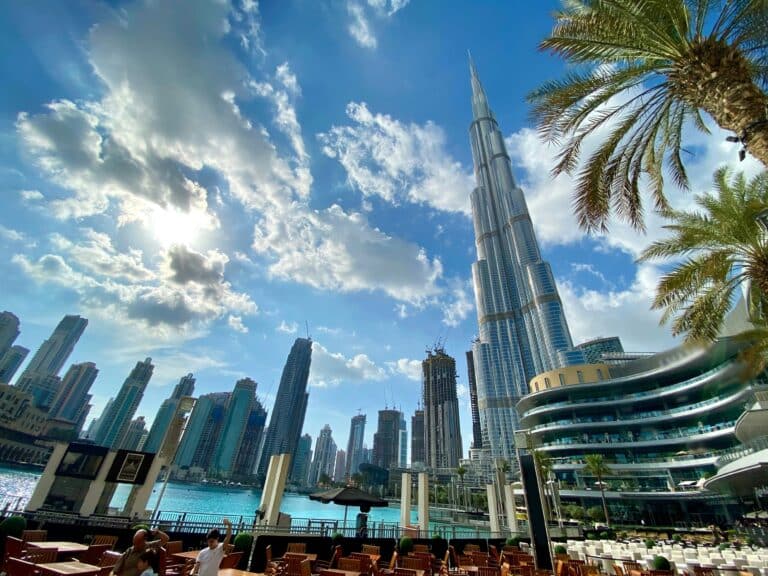
Skims, Primark, Ulta Beauty, and Pacsun all opened their first international stores in Dubai within 90 days.
