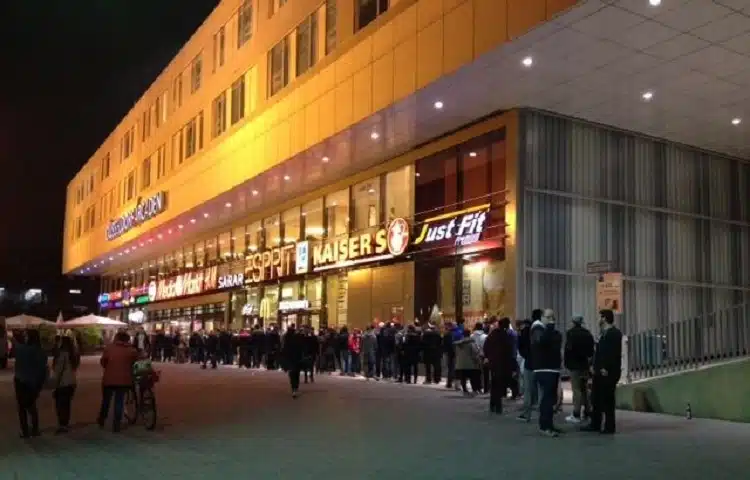
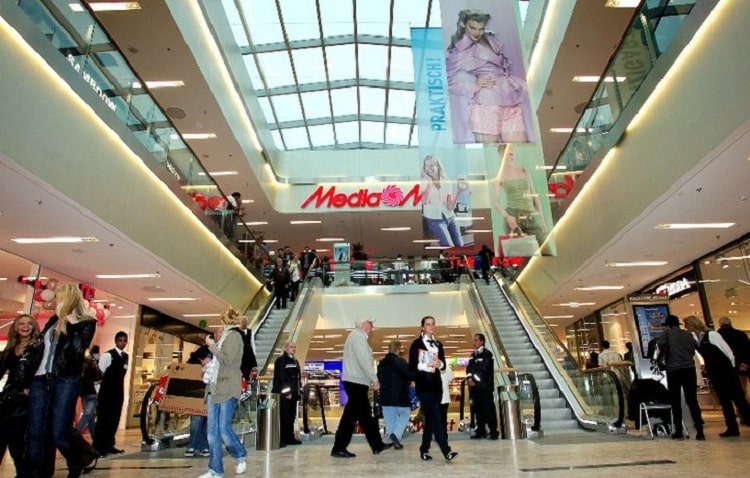
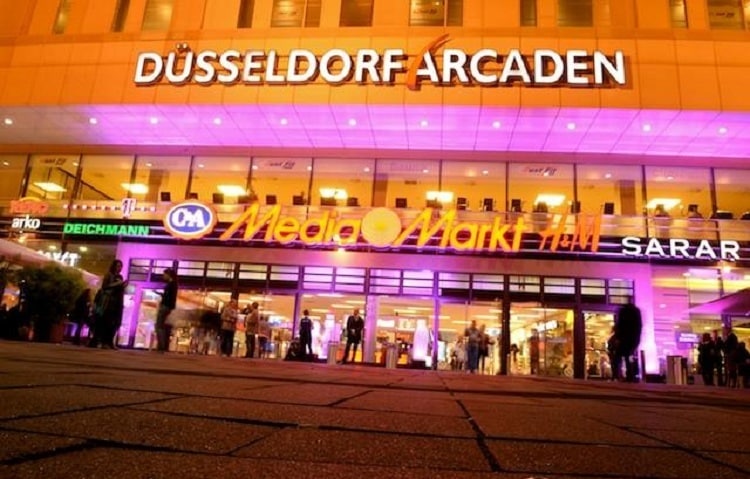
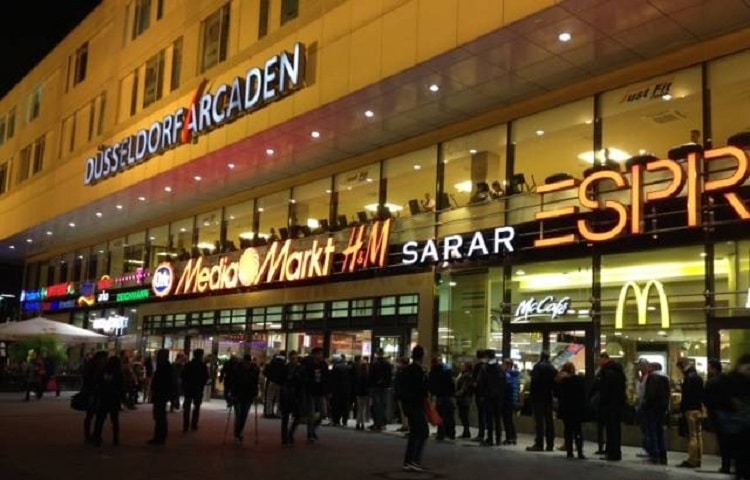
Düsseldorf Bilk Arcaden opened in 2008 in the Bilk district of Düsseldorf, adjacent to Düsseldorf-Bilk S-Bahn station, with approximately 30,000 sqm of gross leasable area as an urban neighbourhood retail centre serving the creative and residential communities of south-central Düsseldorf. The centre is owned by Union Investment Real Estate and contributes to the commercial offer of one of Germany’s most economically prosperous cities.
Bilk is a district of south-central Düsseldorf characterised by a mix of residential use, the Heinrich-Heine-Institut (housing the archives of Düsseldorf’s most celebrated poet), and proximity to the Kunstakademie art academy and the Düsseldorf arts scene. The district’s resident population includes a significant creative and media professional demographic whose retail preferences align with quality fashion, specialty food, and lifestyle retail above the standard mass-market mall offer. Düsseldorf is Germany’s most prosperous major city by per-capita income — home to the Japanese business community in Germany and the North Rhine-Westphalia state capital — and the Bilk Arcaden’s positioning reflects the quality consumer expectations characteristic of the Düsseldorf market. H&M and mainstream fashion tenants serve the residential catchment alongside higher-quality food and specialty operators.
Düsseldorf’s population of approximately 650,000 and its status as Germany’s most affluent major city provide the metropolitan context. The Bilk catchment from the Oberbilk, Unterbilk, and Friedrichstadt districts provides the immediate residential draw. The S-Bahn and tram network connect Bilk to Düsseldorf’s Königsallee luxury retail corridor and the wider metropolitan area.
Union Investment positions Düsseldorf Bilk Arcaden as an urban neighbourhood retail centre in Germany’s premium commercial environment, a market where even secondary district retail assets benefit from the structural elevated spending capacity of Düsseldorf’s population — Germany’s highest per-capita income among major cities — relative to equivalent-sized centres in lower-income urban markets.
Verified signals on brand expansion, store openings, and mall development. Free.
Free · No credit card · Unsubscribe any time