
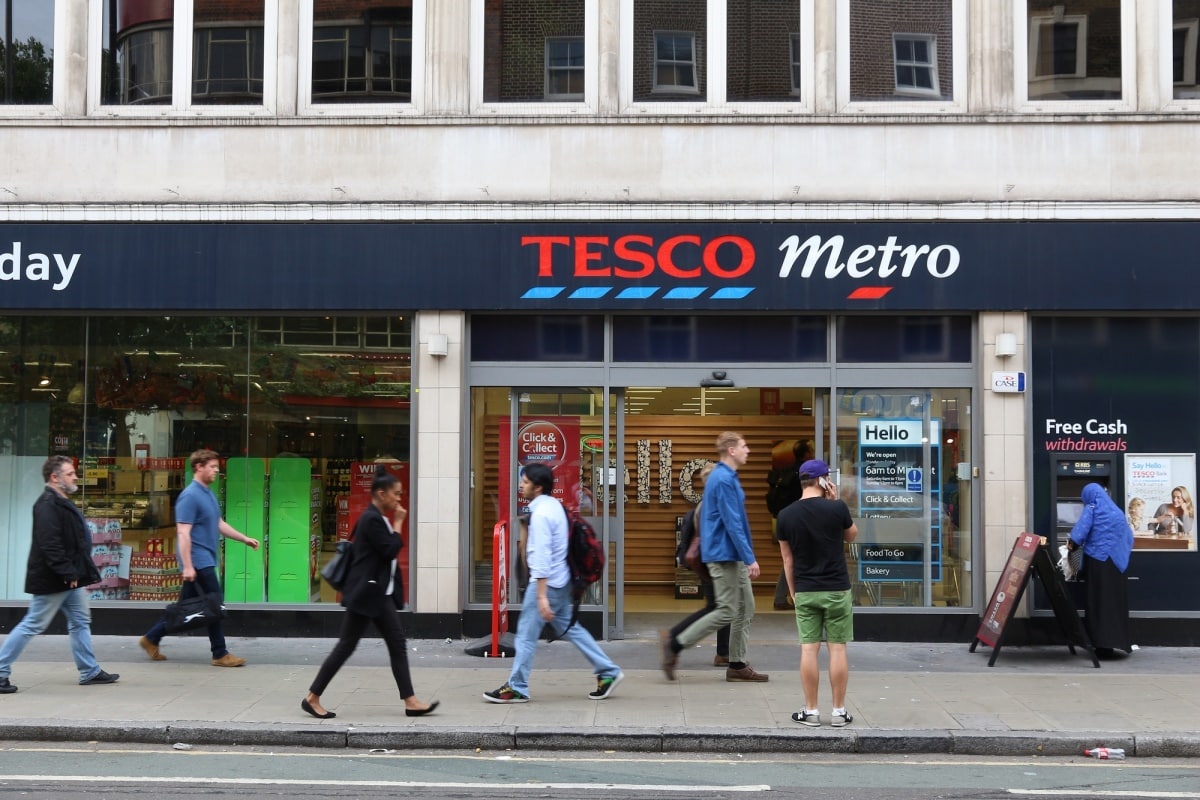
The grocery giant Tesco is quitting the Metro format, and all its stores will be renamed Tesco Express/Superstore.
Britain’s largest retailer Tesco has announced that it is migrating away from the Metro format for its stores. Over the next few months, 89 stores will be renamed Tesco Express, completely changing the concept of stores, and the remaining 58 stores will remain as before, but the name Metro on the signs will be changed to Tesco Superstores.
The Tesco Metro concept introduced back in 1994 underwent a complete format update in 2019. Metro format supermarkets were located mainly in central urban locations and were intended to cater to the flow of visitors to business districts. The concept implied that in such “supermarkets,” customers would come to make large-scale purchases, for example, to buy everything the family needs for a week.
However, according to the company’s data, just under 70% of Metro stores are now used by consumers as minimarkets, that is, for purchases for 1-2 days, and to buy take-out food. Consumers use only 31% of outlets for large-scale purchases. The company blames changing customer habits over the past two years on a decline in the popularity of the Metro format.
Tesco’s announcement to employees states: “Over the past few years, we have seen changes in our customers’ shopping habits, and we made the decision to rebrand all of our Metro stores to reflect these changes better.”
Photo credit: depositphotos.com.
Gross margins and selected profit metrics for Coach, Pop Mart, lululemon, Miniso, Five Below, TJX and Costco, plus where each…
NikeSKIMS, Birkenstock and Starbucks Reserve chose HKRI Taikoo Hui for major China debuts. Why the Shanghai complex keeps winning new…
Bluewater opens its first new anchor since 1999. Next takes the former House of Fraser space with about 132,000 square…
Opening in IMAX 70mm on July 17, 2026: Christopher Nolan's The Odyssey. Select shows went on sale one year in…

European retail is scaling AI, agentic commerce and retail media, but consumer trust is becoming the constraint. Four structural shifts…
Mall operators are no longer leasing space for pop-ups. They are selling audience access.
