
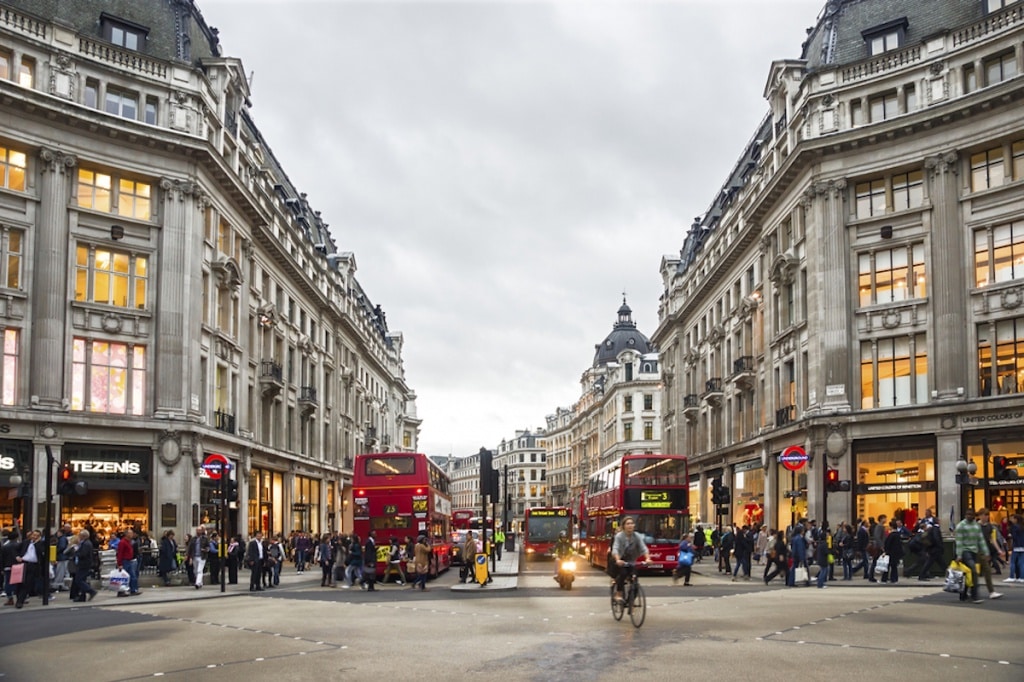
The shopping streets will gradually become a place of leisure rather than shopping.
The retail market in London is changing its usual outline under pressure from the pandemic and restrictions. By 2020, the UK will close a record number of stores of about 20,000, writes CNBC, and citing research.
Simultaneously, as around the world, shoppers are increasingly leaving physical stores for online purchases. According to the British Office of National Statistics, the percentage of online sales in the total retail market rose from 19 to 33 percent just in the first months after the start of the pandemic. By November, that figure had increased to 36 percent.
Analysts say that many retailers, including market leaders, have found themselves where it has become unprofitable and almost impossible to keep stores on the main shopping streets.
Earlier, the primary British fashion retailers Debenhams and Topshop had been in a pre-bankruptcy state from external management’s introduction to new owners’ sales.
Many international brands have been forced to reduce their presence in physical retail. Gap will close one of its flagship stores on Oxford Street as part of a program to optimize its network in Europe.
Analysts note that the main shopping streets will gradually turn into a place of leisure, not shopping, as it was in recent decades. Instead of stores in central locations, it will open more coffee shops, theaters, cinemas, and a lot of public events.
Market participants agree that while shopping for goods is flowing online rapidly, real estate on pedestrian streets will increasingly be refocused on shopping experiences, experiences, and leisure.
Photo credit: depositphotos.com.

European retail is scaling AI, agentic commerce and retail media, but consumer trust is becoming the constraint. Four structural shifts…
Mall operators are no longer leasing space for pop-ups. They are selling audience access.
Physical stores still drive most retail sales, fulfill online orders, support AI shopping, and help brands return to market.
A practical guide to nine mall tenant formats in 2026, from flagships and pop-ups to anchor redevelopment and mixed-use retail.
1,051 of 1,173 US malls hold zero ultra-luxury brands. Half of all Cartier, Chanel, Hermès, and Louis Vuitton mall stores…
Every physical expansion decision starts with the same question: where does the store go?
Verified signals on brand expansion, store openings, and mall development. Free.
Free · No credit card · Unsubscribe any time
