
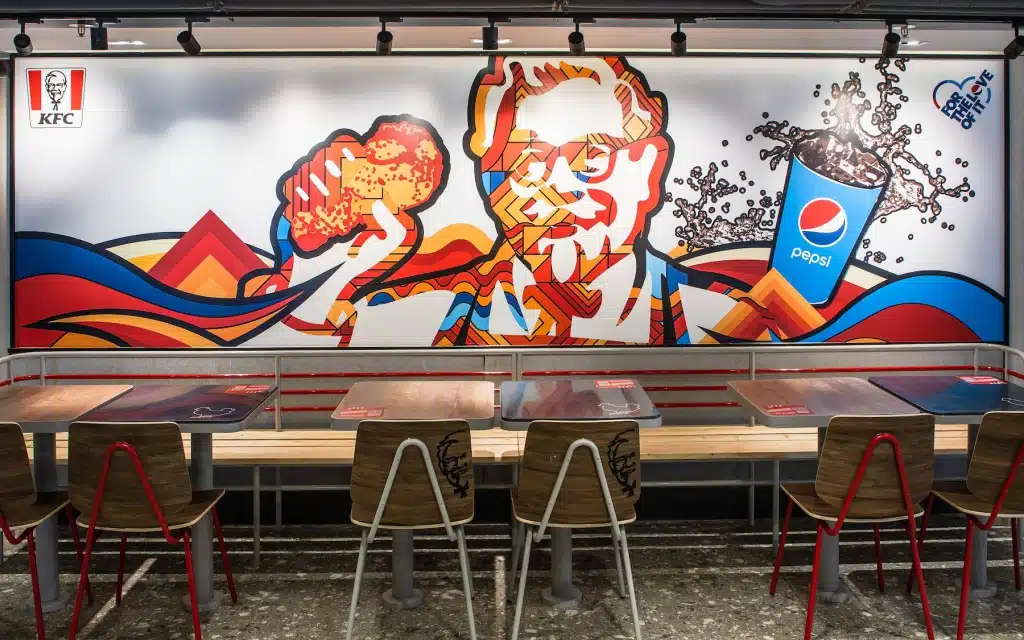
An American fast-food chain has announced the opening of its flagship restaurant in an updated concept in Hong Kong.
The new facility opened in Causeway Bay, one of the most expensive shopping districts in the world.
The three-story restaurant in the business center of Hong Kong is designed for 150 seats. The main idea of the new facility is to provide customers with high-quality service in the traditional fast food facility. The restaurant includes a kiosk with ice cream and desserts in the format of street retail on the pedestrian street.
On the ground floor of the new KFC, there is an area with terminals for independent order placement and a hall with a modern bar interior. On the second floor, there is the main restaurant hall, designed with frescoes. Staircases connecting spaces on different levels are equipped with three-dimensional art installations allowing clients to take photos for Instagram.
“KFC is working to engage clients. We’re taking the core concept of traditional fast food to a new level and maintaining the authenticity of the brand with a more casual and chic style of a real cafe,” commented Janet Ewen, CEO of KFC Hong Kong and Macau. According to him, the format of the conceptual restaurant will create a powerful center of attraction for customers to have a good time and communicate with friends.

The new restaurant is also the first to feature a new, bespoke meal department – so KFC is trying to take the fast-food segment to a new level of service, providing customers with a unique buying experience in line with the latest trends.
The flagship restaurant on Causeway Bay is run by the local franchisee Jardine Restaurant Group, which operates over 800 Yum! Brands under the KFC and Pizza Hut brands in Hong Kong, Macau, Vietnam, Myanmar, and Taiwan.
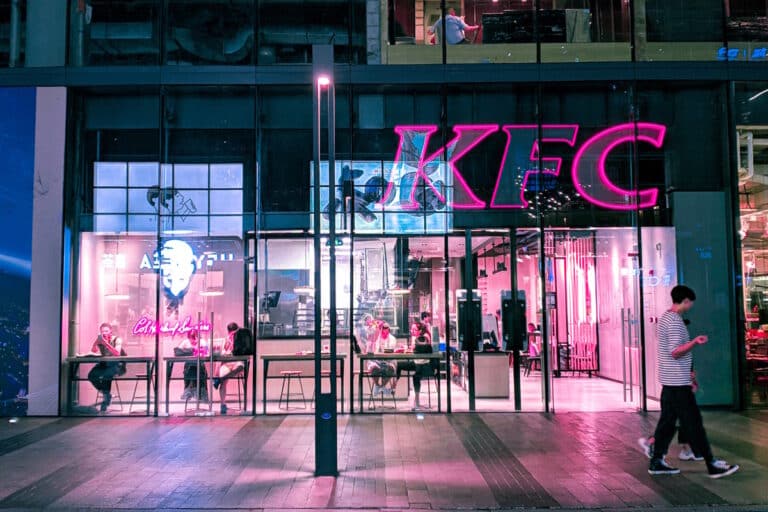
Tel Aviv welcomes the 17th addition to KFC's brand portfolio in Israel.

Popeyes has moved into second place among restaurants specializing in chicken dishes.
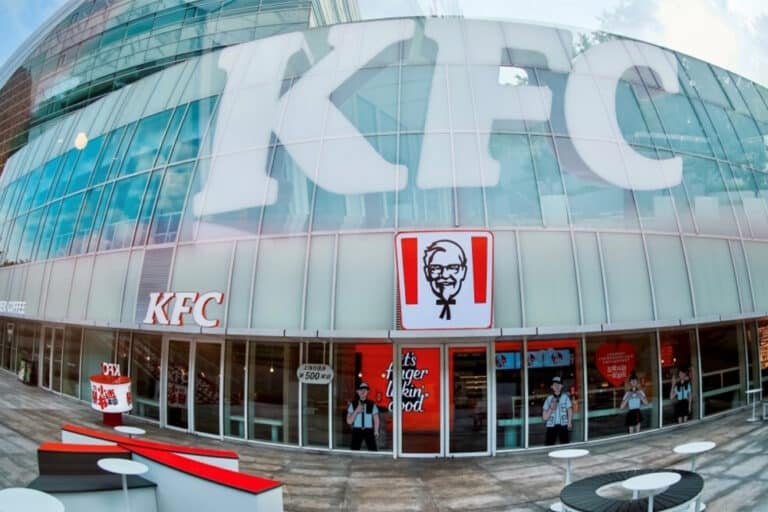
Yum China Holdings Inc. has announced opening of the 500th KFC restaurant in Shanghai.
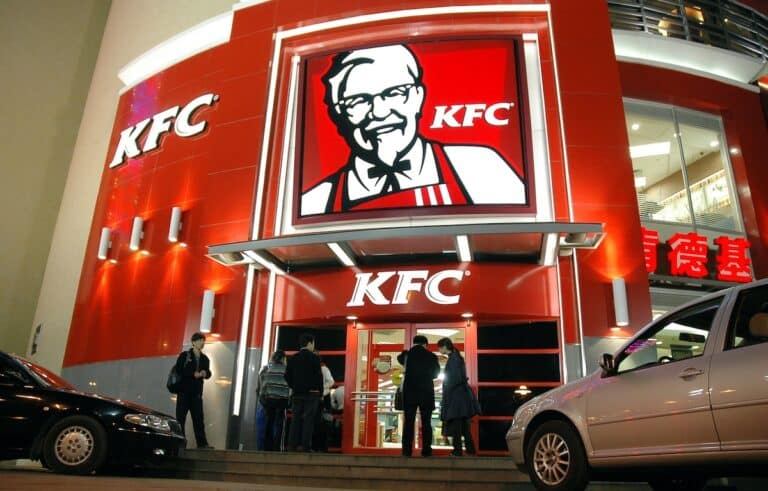
Yum Brand CEO David Gibbs: "I've never seen anything like it in 32 years."

Instead of the usual number of ticket offices, visitors are waiting for several driveways for cars.
The deal is expected to cost between $48.5 million and $56.5 million.
