
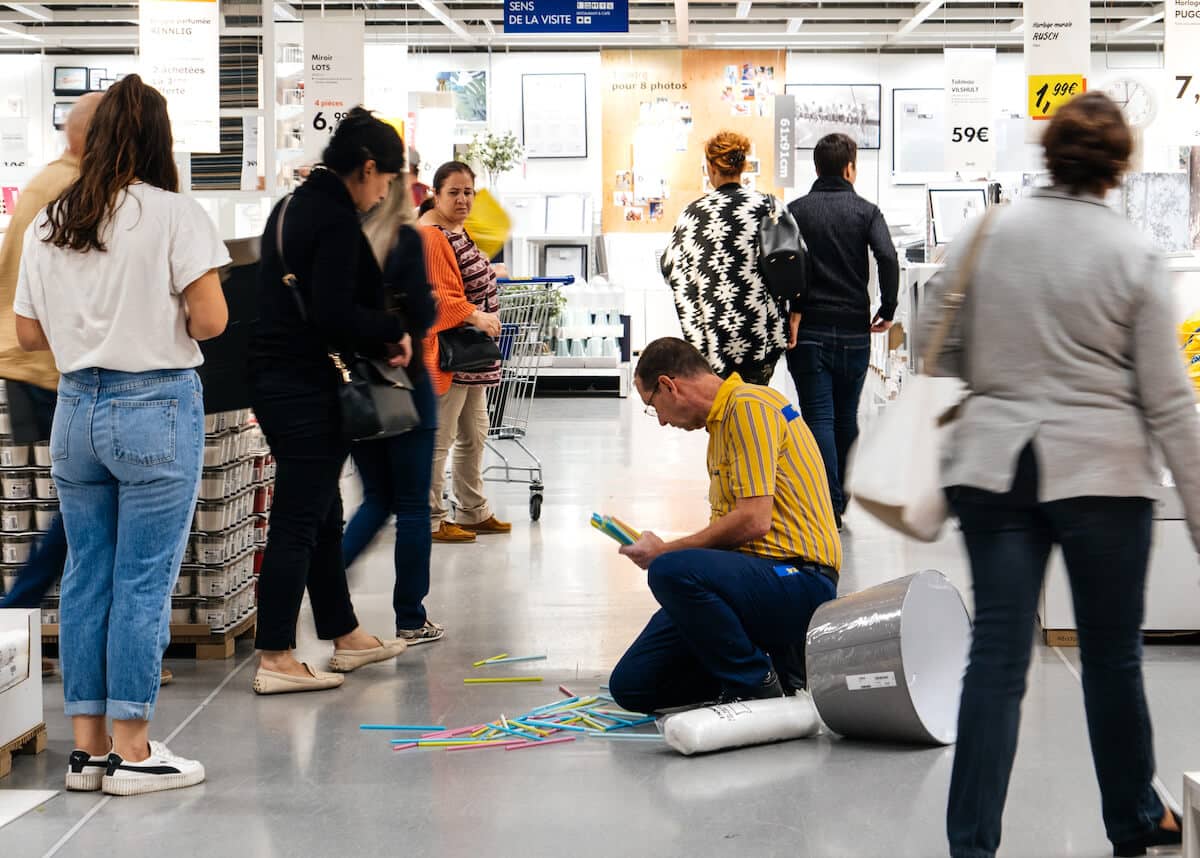
The company is suspected of obtaining illegal access to confidential data on criminal records and financial transactions.
The French division of the Swedish retailer, including several former executives, is on trial for spying on employees and customers. The company’s criminal investigation was initiated back in 2012. The main object of the inquiry was accusations that French IKEA management used an extensive surveillance system. Most of the surveillance was carried out on employees and applicants, and customers involved in legal disputes with the company.
Before the court, which began on Monday, March 22, 2021, and will last until April 2, appeared 15 people. The company faces a fine of up to €3.75 million, and additional penalties of €750,000 may be imposed on the former managers. The defendants in the case can also be sentenced to imprisonment, with terms of up to 10 years.
The French unit management has been accused of operating an extensive “spy network” inside the company from 2009 to 2012. Specifically, a private security company was hired to illegally obtain information about personnel and potential employees, including criminal records and bank statements. For example, an employee could be investigated if he owns a too-expensive car, in the opinion of management. The prosecution contends that in this way, the company not only spied on employees but also put pressure on labor unions and on customers who had legal disputes with IKEA.
In its defense, the French branch of IKEA says that although the individual facts are actual, there is no global espionage strategy. The division also issued an official statement assuring the public that it seriously protects its employee’s and client’s confidential data. Based in Sweden, IKEA’s parent company has distanced itself from the events and similar surveillance practices.
Photo credit: depositphotos.com.

European retail is scaling AI, agentic commerce and retail media, but consumer trust is becoming the constraint. Four structural shifts…

Mall operators are no longer leasing space for pop-ups. They are selling audience access.
Physical stores still drive most retail sales, fulfill online orders, support AI shopping, and help brands return to market.
A practical guide to nine mall tenant formats in 2026, from flagships and pop-ups to anchor redevelopment and mixed-use retail.
1,051 of 1,173 US malls hold zero ultra-luxury brands. Half of all Cartier, Chanel, Hermès, and Louis Vuitton mall stores…

Every physical expansion decision starts with the same question: where does the store go?
Verified signals on brand expansion, store openings, and mall development. Free.
Free · No credit card · Unsubscribe any time
