
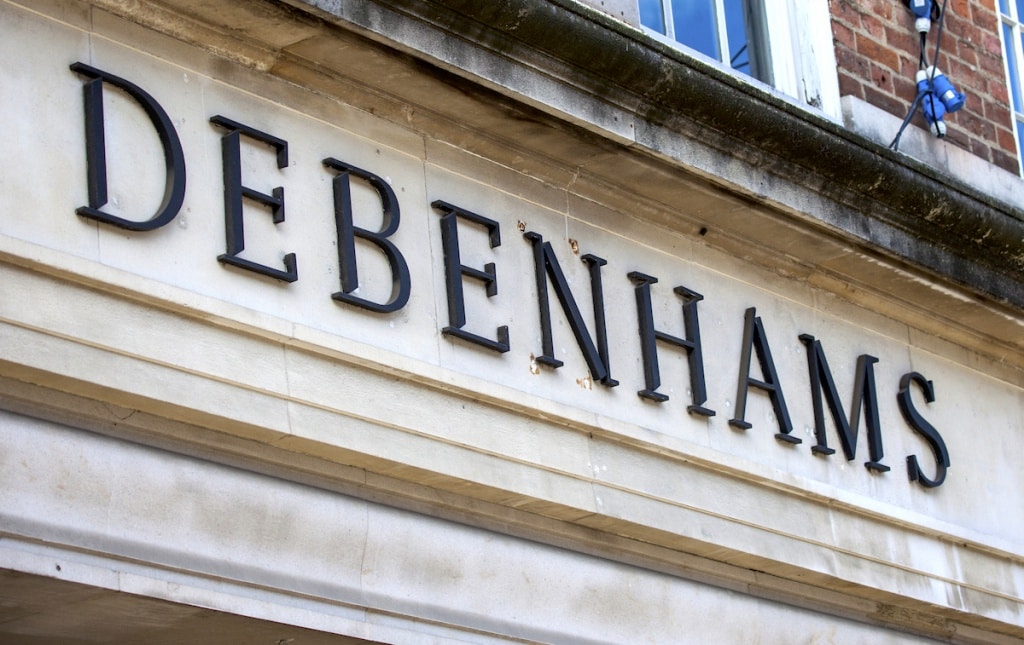
The retailer decided the day after the bankruptcy of the primary tenant – the owner of Topshop brand.
Debenhams department stores were the iconic retail spaces of the U.K. and others since the late 18th century. However, like many retailers, the company does not seem to survive the pandemic. It has officially become known that the Debenhams chain of department stores will begin complete liquidation after the Christmas holidays. Debenhams’ first closures are expected as early as 2021, and by the end of March, all department stores at the chain will be closed.
The decision to close the chain, which has 124 stores and employs 12,000 people, was announced the day after Arcadia’s bankruptcy. This company owns such a famous brand as Topshop. The brand’s stores were anchor tenants in many of Debenhams’ department stores. It is estimated that Arcadia sold around £100 million worth of goods annually through Debenhams’ trading platforms.
It was one of the last drops for Debenhams to make a tough decision. Back in the summer, the network went into external administration due to the difficult financial situation and tried to find buyers. In particular, negotiations were held with the company J.D. Sports. However, these attempts have not yet been successful.
It is expected that large networks, including Next and Marks & Spencer, will show interest in Debenhams’ most exciting objects. Probably, some trading spaces will be able to be kept in the same form. However, many of the department stores may be divided into smaller stores or converted for other purposes.
Due to the imminent liquidation, Debenhams is organizing a mass sale of goods starting from December 2. It was made possible because stores in England were available for the first time in four weeks of lockdown.

European retail is scaling AI, agentic commerce and retail media, but consumer trust is becoming the constraint. Four structural shifts…
Mall operators are no longer leasing space for pop-ups. They are selling audience access.
Physical stores still drive most retail sales, fulfill online orders, support AI shopping, and help brands return to market.
A practical guide to nine mall tenant formats in 2026, from flagships and pop-ups to anchor redevelopment and mixed-use retail.
1,051 of 1,173 US malls hold zero ultra-luxury brands. Half of all Cartier, Chanel, Hermès, and Louis Vuitton mall stores…
Every physical expansion decision starts with the same question: where does the store go?
Verified signals on brand expansion, store openings, and mall development. Free.
Free · No credit card · Unsubscribe any time
